
Leadership & Careers
Why it matters
Job descriptions are often created by reusing an old template, adding every imaginable skill, and sending the result to recruitment without a serious discussion of the work. This produces mismatched expectations, noisy applicant pools, and interviews that evaluate different roles depending on who is asking the questions.
The document is more than an advertisement. It should align the hiring manager, recruiter, interview panel, candidate, and eventual employee around a shared understanding of success.
Leadership & Careers
The central argument
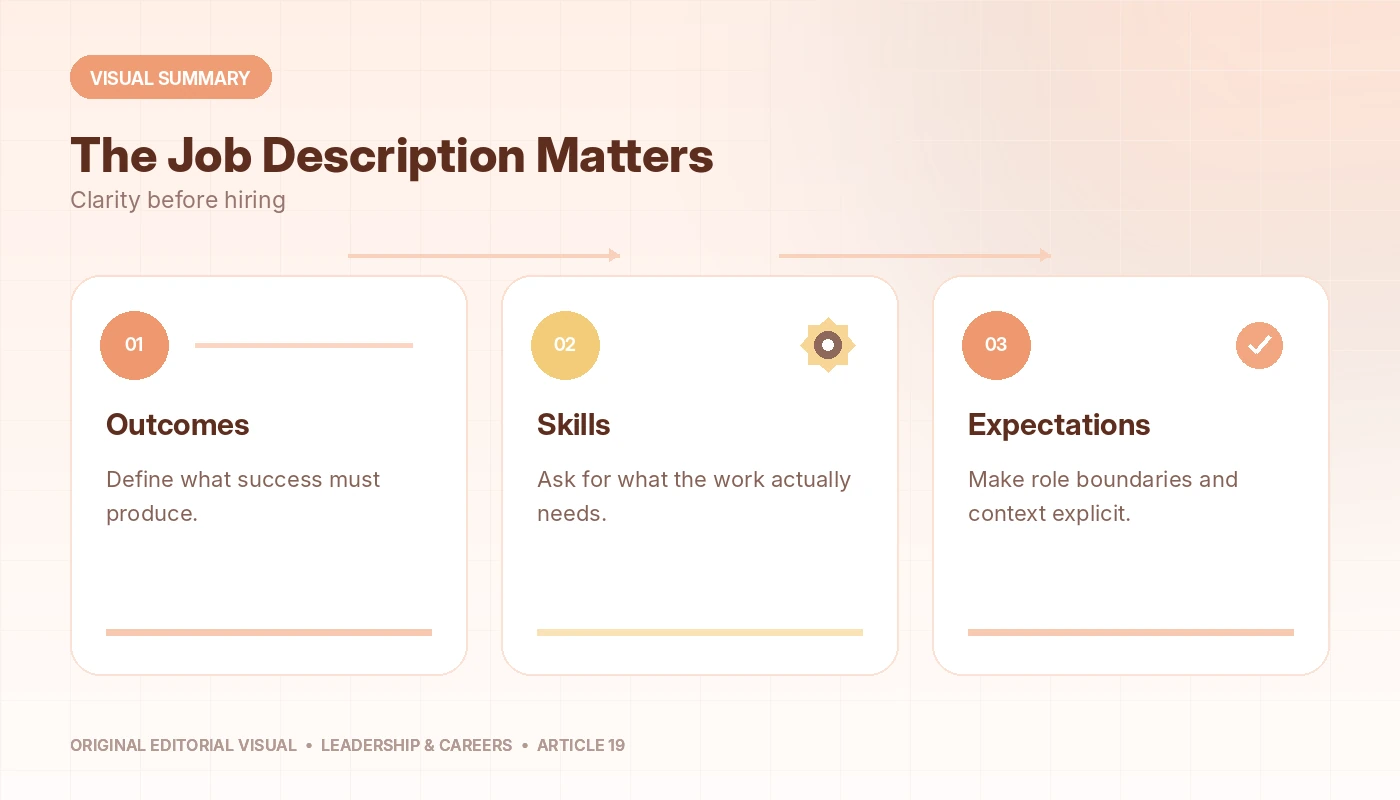
The article calls for descriptions that explain purpose, responsibilities, outcomes, relationships, decision scope, and realistic qualifications. Requirements should distinguish what is essential from what can be learned.
Overreliance on credentials or years of experience can exclude capable candidates without improving fit. Evidence of relevant performance and learning ability is often more useful than a long list of filters.
Leadership & Careers
What to do in practice
- Start with the business problem and the outcomes expected in the first year.
- Describe real responsibilities and decision rights in plain language.
- Separate essential capabilities from preferences and trainable knowledge.
- Align the interview plan and evaluation criteria with the published description.
- Review the document after hiring to learn what was inaccurate or missing.
Before posting, ask a strong current employee and a recent outsider to read the description. If they cannot explain what success looks like, the document is not ready.
Leadership & Careers
Closing perspective
Better hiring begins before sourcing. A thoughtful job description improves attraction, assessment, expectation setting, and the employee’s eventual start.