
Leadership & Careers
Why it matters
Managers sometimes describe their teams in parental language, believing care and control are the same thing. The analogy can become unhealthy when it removes agency, discourages challenge, or excuses unequal standards.
Good leadership respects the organization’s goals while also recognizing the legitimate needs and potential of the people doing the work.
Leadership & Careers
The central argument
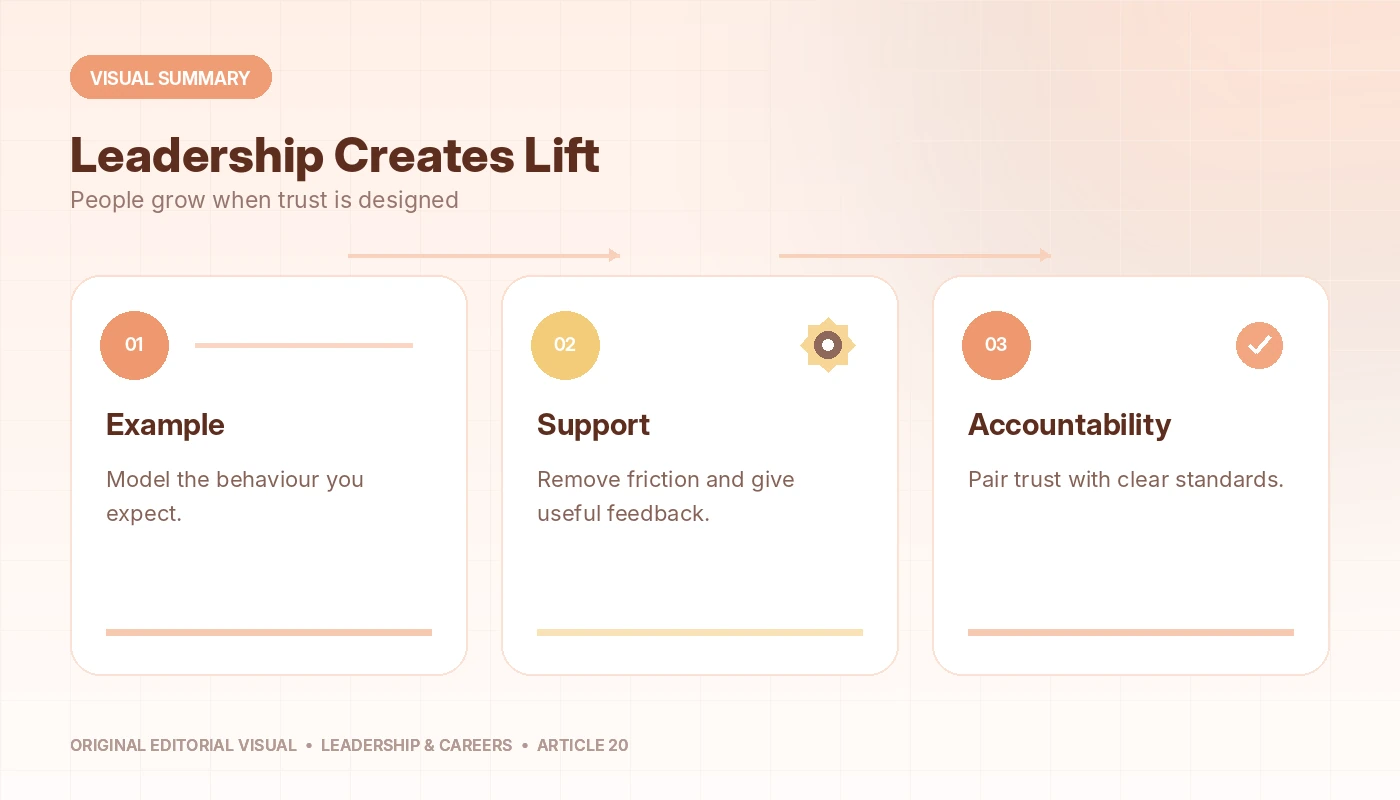
The article encourages leaders to learn from the managers they valued—and from those whose behavior they never want to repeat. It asks leaders to balance business and team needs, give honest support, and develop successors rather than protect personal indispensability.
A capable replacement is not a threat. It is evidence that the leader has created strength beyond their own individual contribution.
Leadership & Careers
What to do in practice
- Treat team members as responsible professionals and explain expectations clearly.
- Balance short-term delivery with workload, growth, and sustainable performance.
- Remember how previous leaders made you feel and choose what to repeat or reject.
- Share knowledge and create opportunities that prepare others to step up.
- Use authority to remove obstacles and uphold fairness, not to demand dependence.
At the end of each month, ask: Who has gained confidence, judgment, visibility, or opportunity because of my leadership? The answer is a stronger indicator than how many decisions still require your approval.
Leadership & Careers
Closing perspective
Good leaders deliver results and leave people more capable. Their success is visible in both performance and the strength of the team that continues after them.