
Operations & Strategy
Why it matters
Pricing promotions often rely on urgency, bundles, or anchor points to influence choice. These techniques are not inherently wrong, but they become fragile when the numbers are designed to confuse or when the apparent bargain is worse than the simple option.
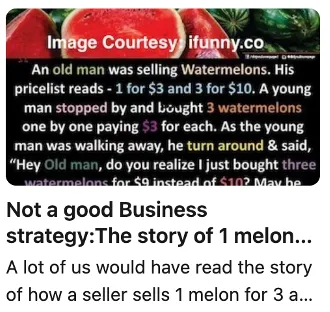
The melon story illustrates how a seller may win a larger transaction through a pricing trick while teaching the buyer not to trust the seller.
Operations & Strategy
The central argument
The article contrasts transactional cleverness with long-term strategy. A durable business creates a fair exchange in which the customer understands the value and is willing to return—not merely one in which the seller extracts a little more from a single encounter.
Service, quality, transparency, and repeat behavior matter because customer lifetime value is built across experiences, not at one moment of persuasion.
Operations & Strategy
What to do in practice
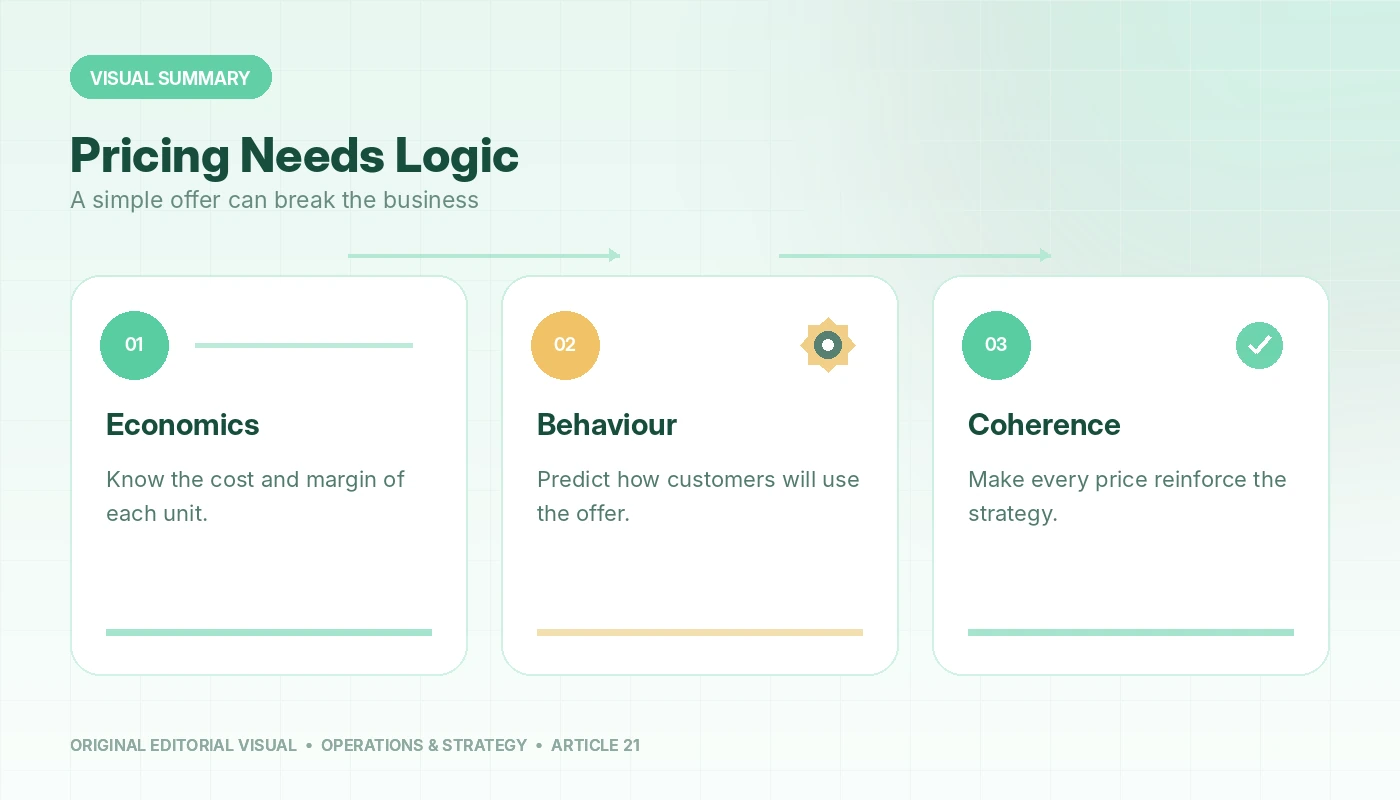
- Make pricing easy enough for customers to understand and compare honestly.
- Design bundles around genuine convenience or value, not arithmetic confusion.
- Consider trust and repeat behavior when evaluating promotional performance.
- Train frontline teams to explain value rather than pressure customers.
- Measure complaints, returns, and retention alongside immediate sales lift.
Review a promotion from the customer’s perspective: What do they believe they are receiving, what is the effective unit value, and how will they feel after calculating it at home? A sustainable offer survives that test.
Operations & Strategy
Closing perspective
Business strategy is not a contest to outsmart the customer. The stronger win is a fair exchange that both sides are happy to repeat.