
AdTech & Media
Why it matters
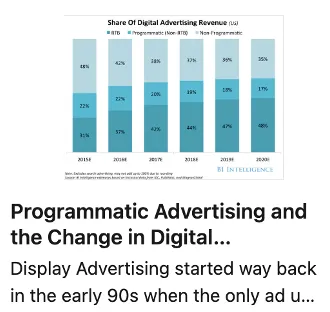
Early digital display buying involved significant manual negotiation and limited flexibility once a campaign was live. Advertisers faced challenges of scale, geographic reach, audience precision, and proving return on investment across a fragmented publisher market.
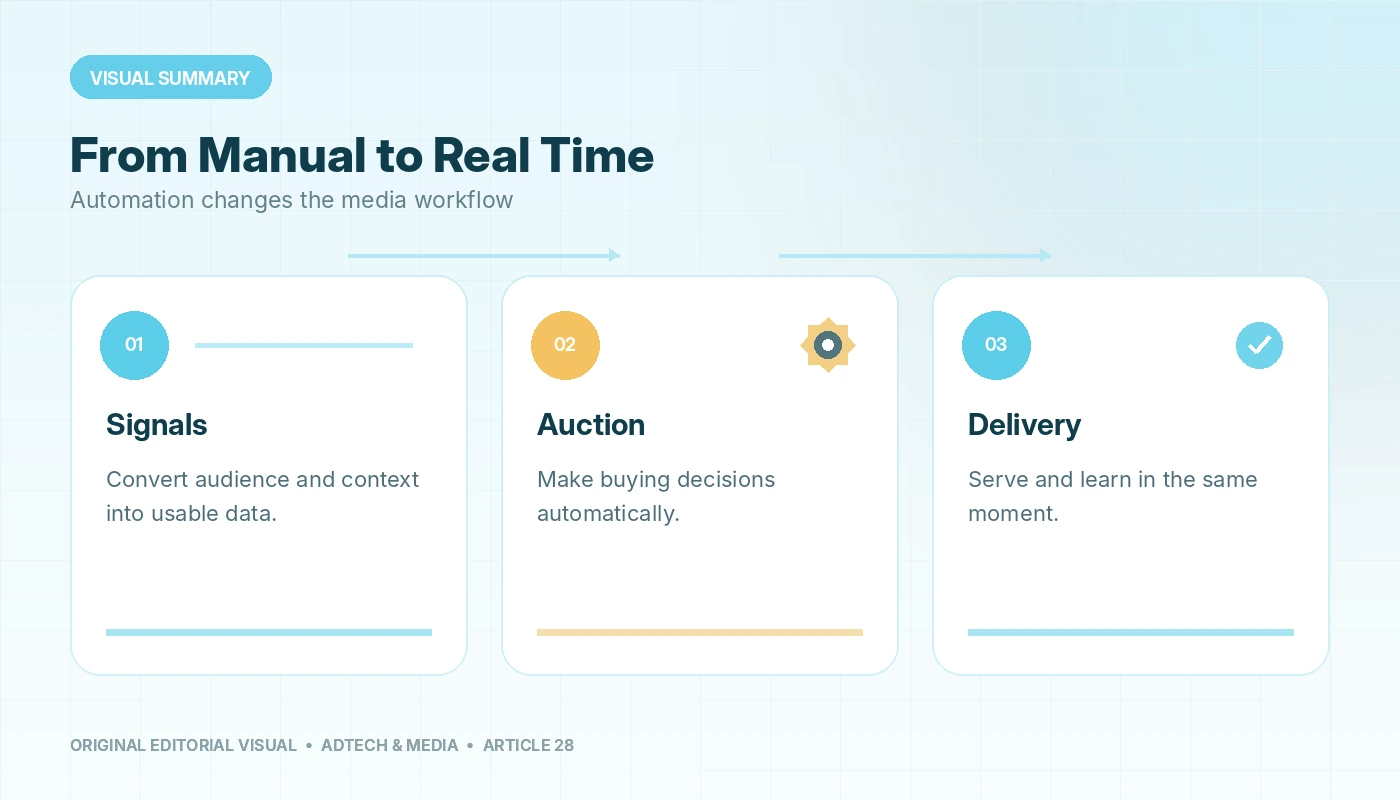
Real-time bidding and programmatic platforms created infrastructure for buyers and sellers to transact more efficiently and adjust decisions as data arrived.
AdTech & Media
The central argument
The article explains how programmatic introduced audience targeting, automated auctions, faster optimization, and broader access to inventory. It also anticipated the growing importance of mobile as digital consumption moved across devices.
Automation did not remove the need for strategy. Buyers still needed clear objectives, reliable data, appropriate creative, inventory controls, and operators who understood how platform settings shaped outcomes.
AdTech & Media
What to do in practice
- Use audience and context signals to serve a defined campaign purpose.
- Select buying models according to quality, control, scale, and price—not fashion.
- Monitor where impressions are delivered and how intermediaries affect cost and transparency.
- Adapt creative and measurement to mobile and cross-device behavior.
- Retain skilled operations to manage setup, optimization, exceptions, and learning.
Translate the media objective into a buying brief that defines audience, inventory, bid logic, pacing, quality controls, creative, measurement, and decision rights. Automation performs best when the instructions are coherent.
AdTech & Media
Closing perspective
Programmatic changed the mechanics of digital advertising. Its lasting value depends on using that machinery to make better decisions, not merely more transactions.