
AdTech & Media
Why it matters
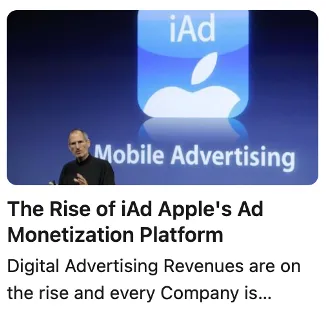
As mobile usage expanded, publishers needed ways to monetize applications and advertisers needed formats suited to the device rather than reduced versions of desktop banners. Apple’s iAd initiative emerged from that platform opportunity.
The model evolved as market expectations moved toward broader buying access, integration with demand-side systems, geographic scale, and greater flexibility for publishers and advertisers.
AdTech & Media
The central argument
The article examines iAd as part of Apple’s wider ecosystem strategy. Control of hardware, software, accounts, and the application environment offered potential advantages in user experience and distribution.
At the same time, a closed platform had to balance quality and privacy with the openness, scale, and interoperability buyers expected from the wider advertising market.
AdTech & Media
What to do in practice
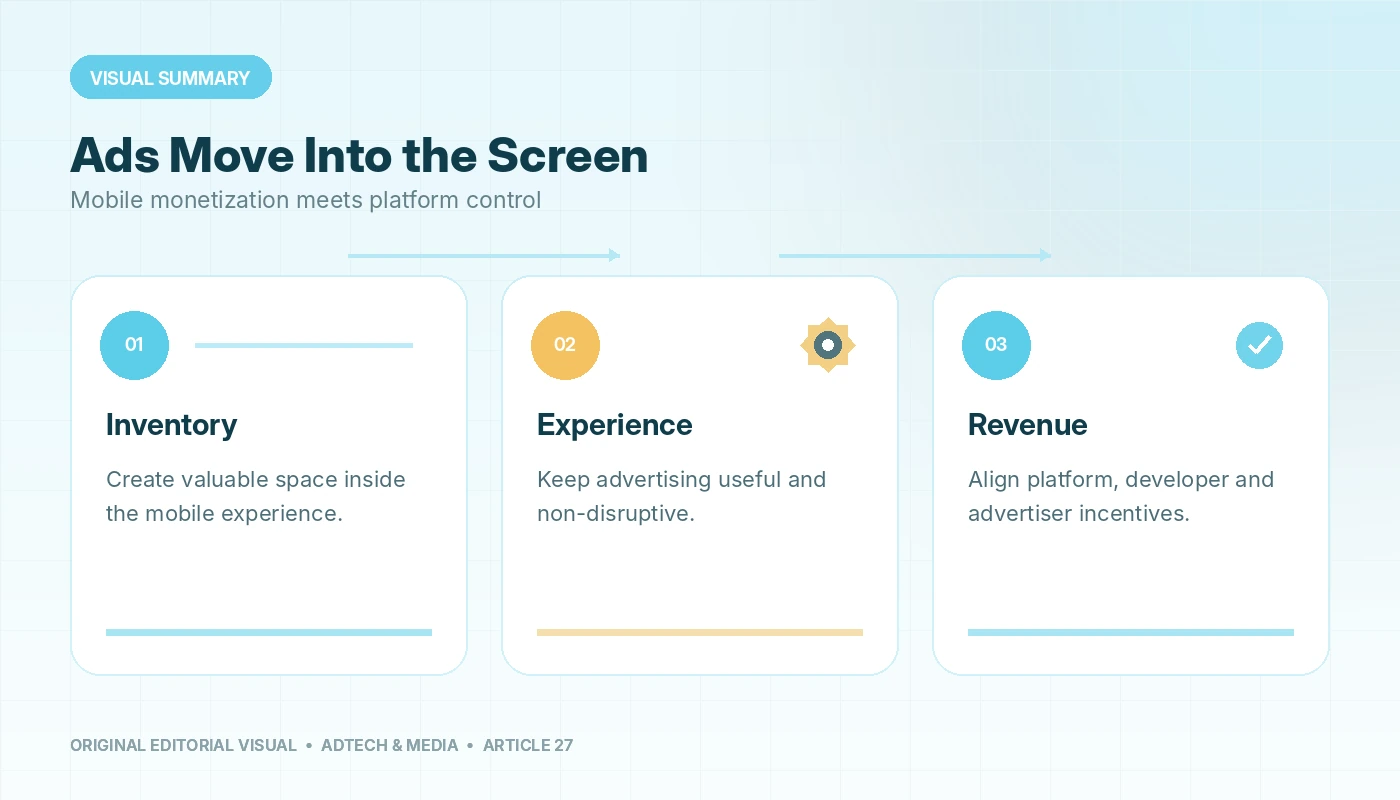
- Platform integration can improve experience but may limit interoperability and buyer flexibility.
- Rich mobile creative should respect load time, attention, and the user’s in-app context.
- Publisher adoption depends on transparent economics, fill, control, and operational simplicity.
- Advertiser adoption depends on reach, measurement, targeting quality, and workflow compatibility.
- Privacy and identity choices shape the long-term value of platform-owned advertising.
Evaluate a platform proposition across four lenses: audience access, creative experience, economics, and operational integration. Strength in one dimension rarely compensates indefinitely for weakness in the others.
AdTech & Media
Closing perspective
The iAd story illustrates a continuing truth in AdTech: platform control creates opportunity, but lasting adoption requires value for users, publishers, and buyers at the same time.