
Case study · Operational Excellence
When Flexibility Became a Cost Premium
How operating data supported a vendor-to-in-house transition that cut direct monthly people cost by ~79% while protecting delivery continuity.
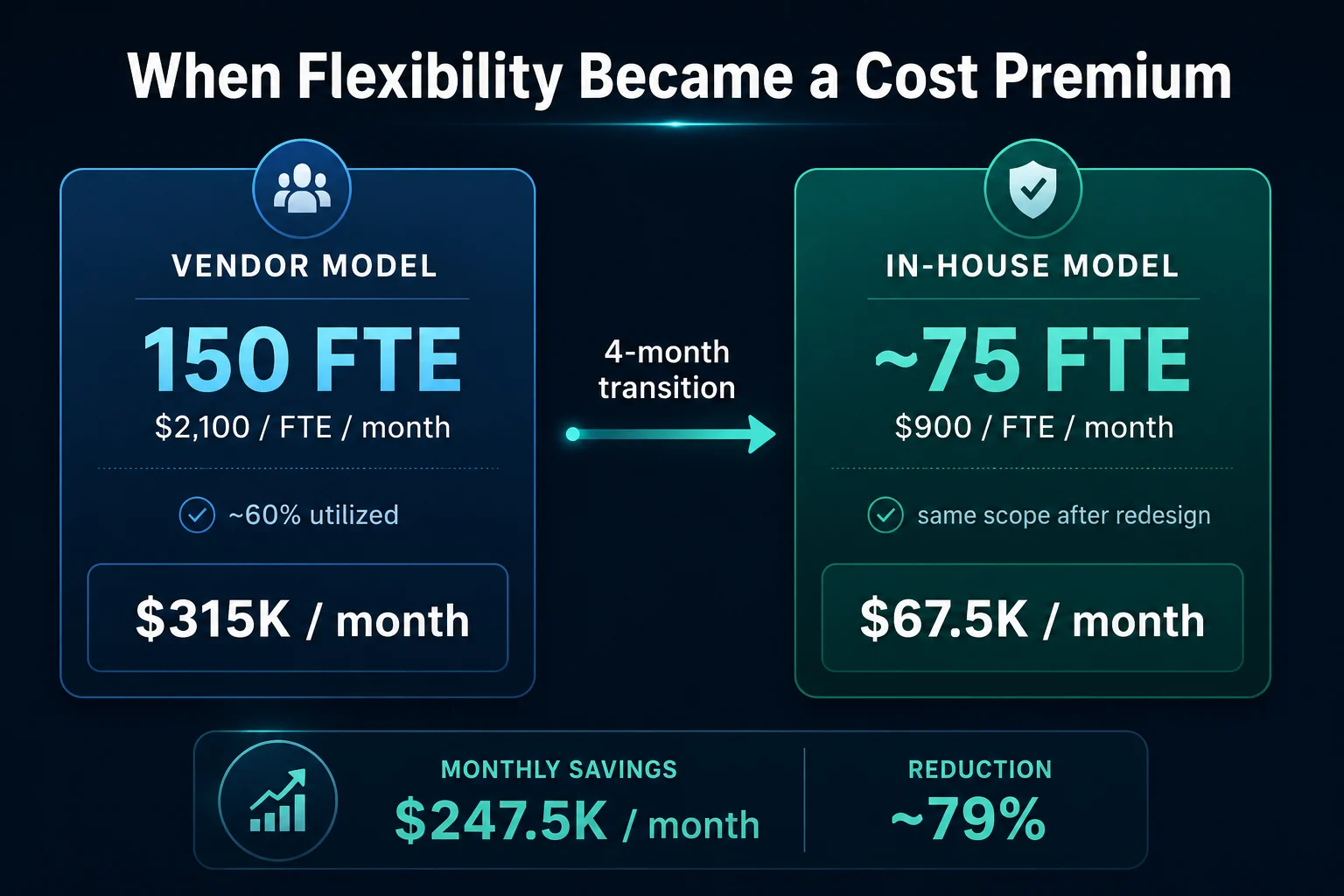
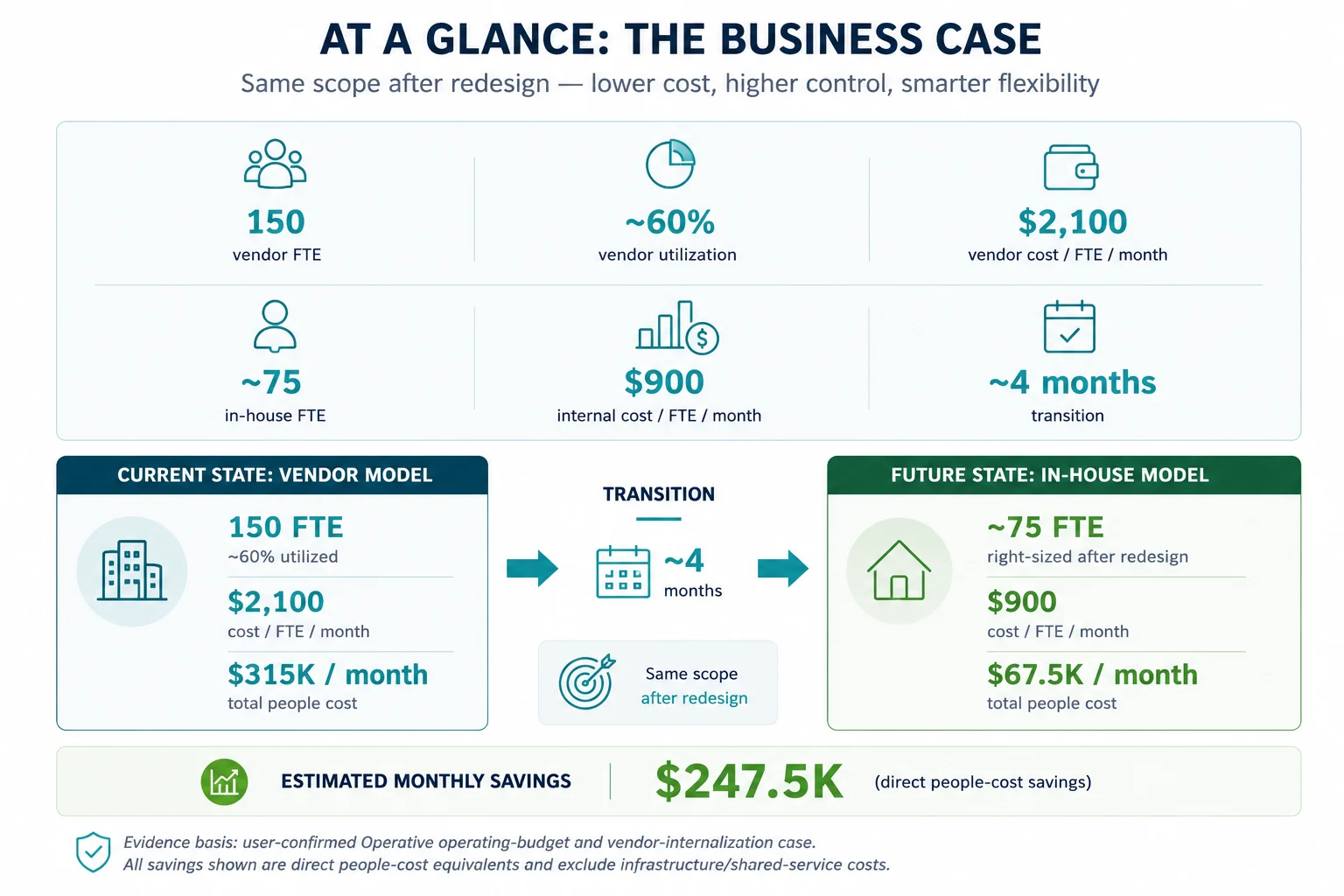
The vendor model appeared attractive because it offered staffing flexibility. The operating data told a different story: the flex capacity was rarely turned off, utilization remained around 60%, and the unit cost was roughly 2.5x the internal FTE rate.
A sourcing decision grounded in utilization, not assumptions
The vendor model appeared attractive because it offered staffing flexibility. The operating data told a different story: the flex capacity was rarely turned off, utilization remained around 60%, and the unit cost was roughly 2.5x the internal FTE rate. Workflow and demand analysis indicated that the same scope could be managed with about 60-75 internal FTE.
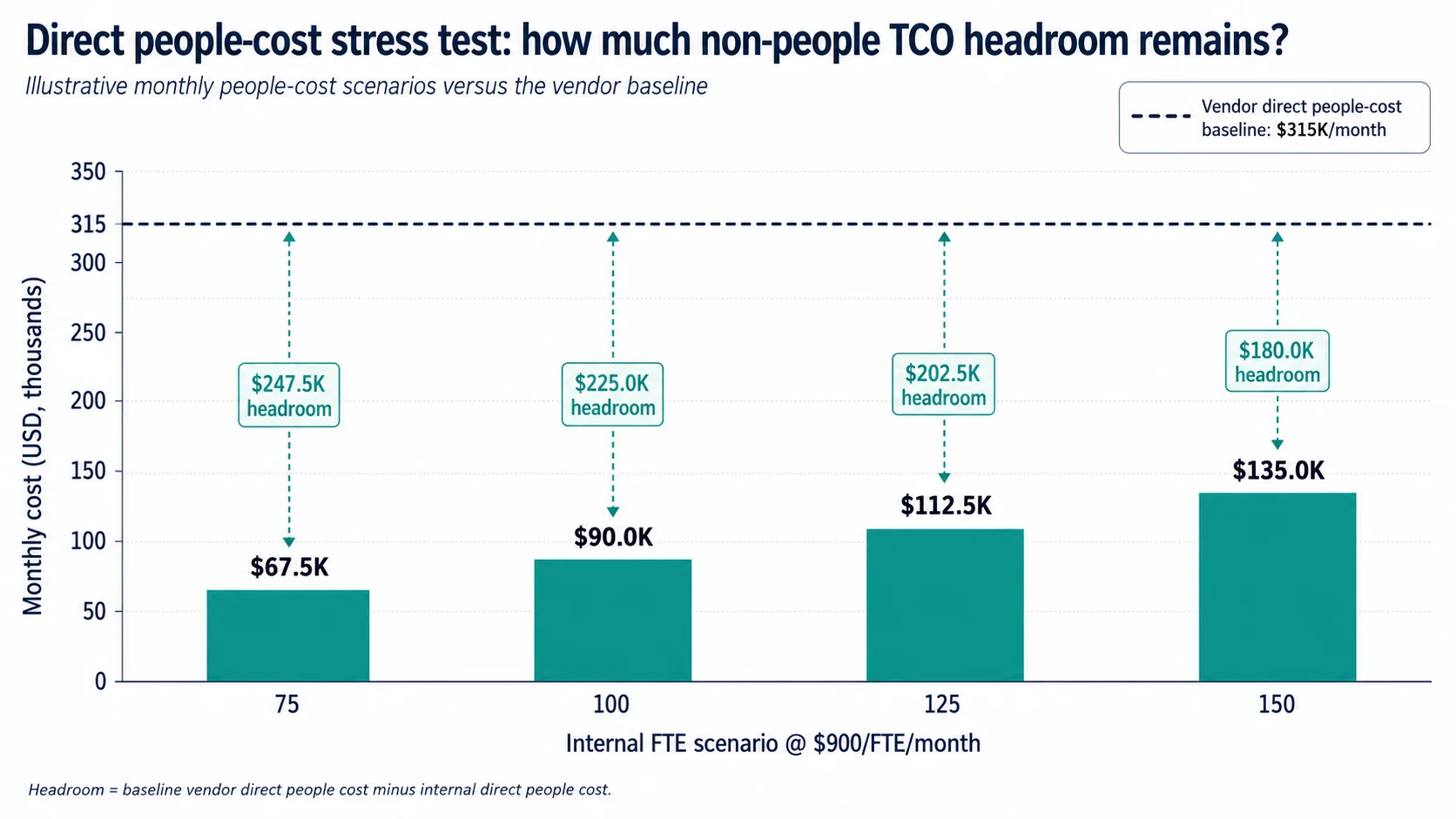
The leadership decision was to internalize the work, hire and transition approximately 75 FTE, and protect continuity during the move. The transition was completed in about four months. Direct monthly people cost fell from roughly $315,000 to $67,500 - an approximately 79% reduction, or about $2.97 million annualized before infrastructure and shared-service costs.
The rate card was not the real economics
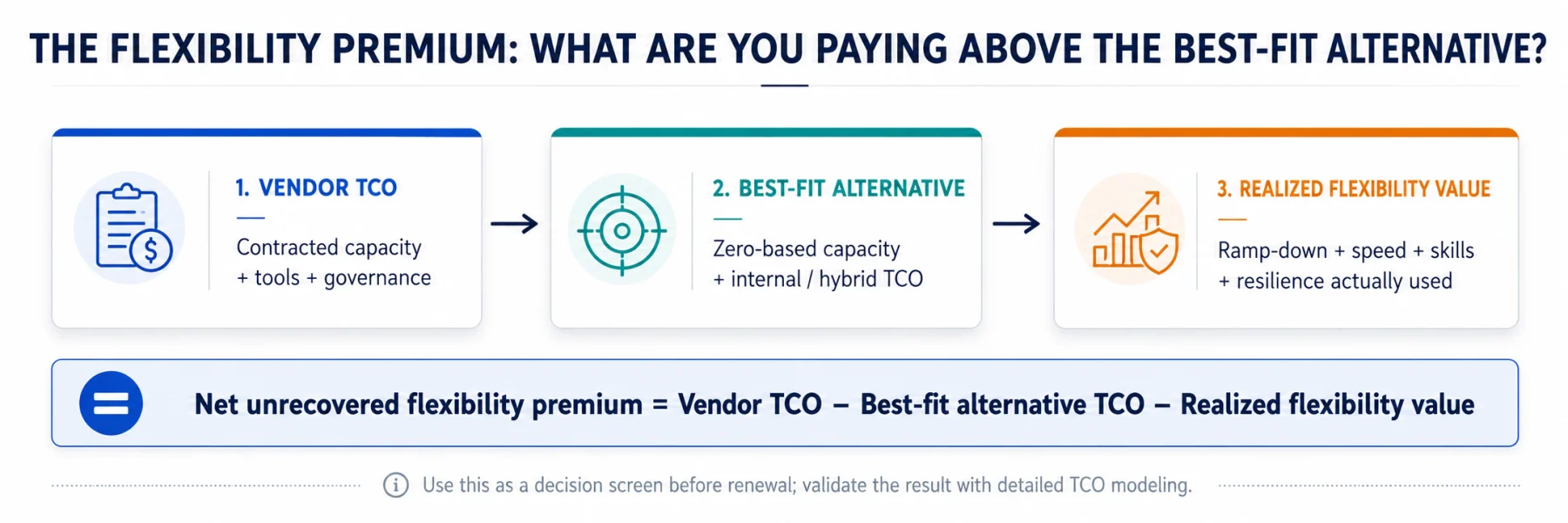
The critical issue was not simply that one FTE cost more than another. The larger problem was a mismatch between the commercial logic of the contract and the way the capacity was actually used.
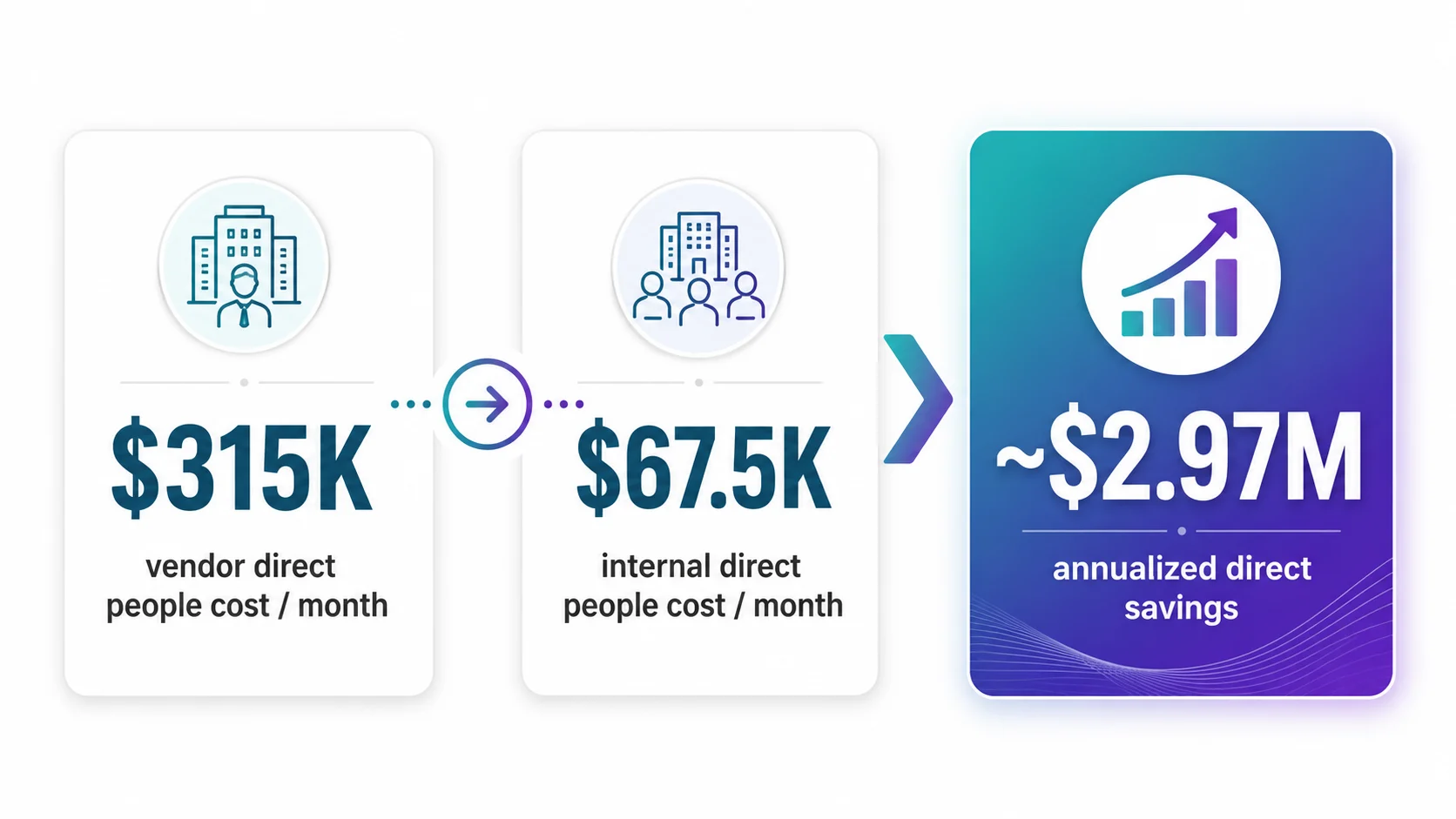
- Vendor staffing remained in place even when only around 60% of the capacity was being utilized, weakening the business case for an elasticity premium.
- The vendor unit rate was roughly 2.3x the internal rate ($2,100 versus $900 per FTE per month).
- Demand and workflow analysis showed that a smaller internal team could absorb the same scope after redesign.
- The organization was paying simultaneously for unused capacity and for the vendor margin embedded in the rate card.
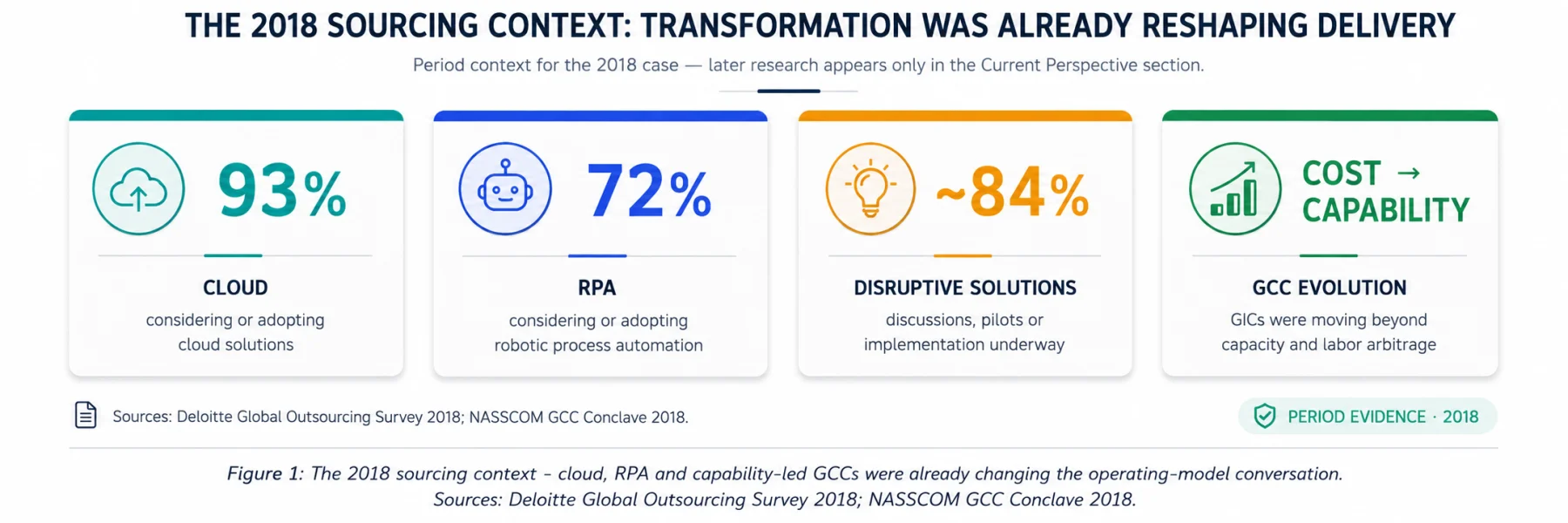
Trade short-term elasticity for control, utilization and retained knowledge
The decision was not framed as a simplistic “vendor bad, captive good” choice. It was a trade-off: accept the work of recruiting and transitioning an internal team in exchange for lower recurring cost, tighter utilization, stronger knowledge retention and greater operational control.
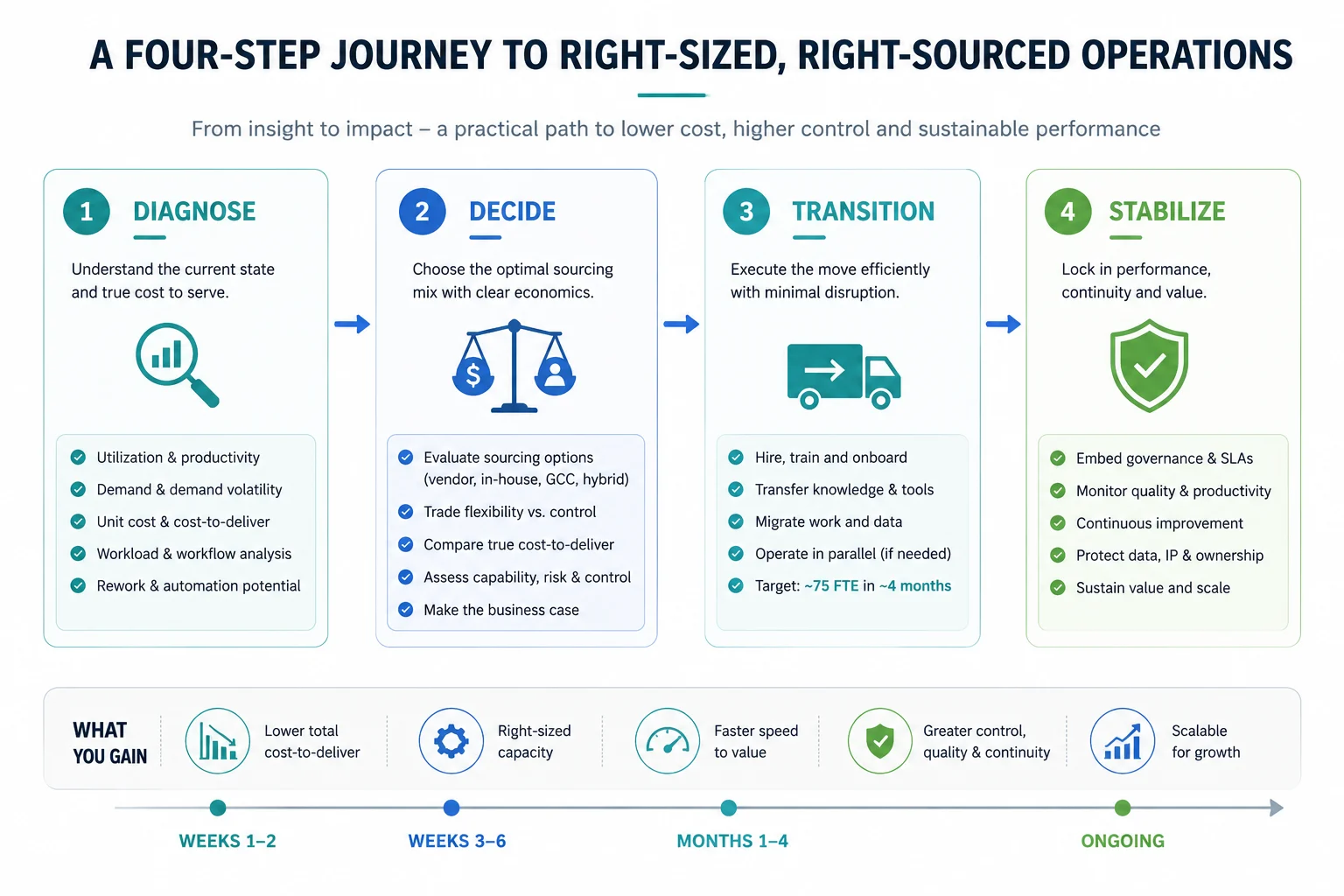
Leadership actions
- Diagnose actual demand and utilization rather than relying on contracted headcount as the proxy for capacity needs.
- Re-estimate the required team size from workflows, volumes and coverage - not from the incumbent vendor roster.
- Make the sourcing decision using cost-to-deliver, knowledge retention, service risk and operational control together.
- Recruit and transition approximately 75 FTE while maintaining delivery continuity.
- Stabilize the internal model and use the transition as a reset point for process ownership and performance governance.
The intervention attacked both price and structural inefficiency
- Utilization: paid capacity was brought closer to actual demand.
- Unit economics: the recurring labor rate dropped sharply. •
- Organization design: the target team was sized from work requirements instead of inherited vendor headcount.
- Control: internal ownership strengthened the ability to standardize, automate and redesign work over time.
- Knowledge retention: capability and process context stayed within the organization rather than walking out with the contract.
MARGIN PRINCIPLE
Cost-to-deliver should expose the economics of every operating choice - vendor flexibility, technology fees, staffing, automation and service quality - not just compare rate cards.
A repeatable operating discipline
- Separate paid capacity from productive capacity. Track utilization at role, queue and process level.
- Quantify the value of elasticity. If capacity is rarely switched off, price the model as effectively fixed.
- Re-size before re-source. Do not transfer an inefficient staffing pyramid unchanged into a new model.
- Build a total-cost model. Include direct people cost, facilities, tools, management, transition, attrition, quality and risk.
- Protect continuity. The financial case is irrelevant if the transition destabilizes customers or revenue.
- Revisit the sourcing mix periodically. Demand patterns, automation potential and strategic criticality change.
EXECUTIVE TAKEAWAY
The lesson is not “insource.” The lesson is “measure the premium.”
A vendor model can be the right answer when it provides scarce skills, speed, scale or genuine demand flexibility. But when flexibility is purchased and not used, the organization should question whether the premium still has value. In this case, operating evidence supported a controlled internalization that materially improved direct people economics without a long transformation window.
RESULT
~79% lower direct monthly people cost;
~$2.97M annualized direct savings before infrastructure/shared-service costs;
transition completed in ~4 months.
AUTHOR NOTE
This case study is based on operating-budget evidence supplied by author from his leadership experience at Operative. It is presented as a leadership and operating-economics case, not as a representation of Operative’s current operating model or current costs.