
AdTech & Media
Why it matters
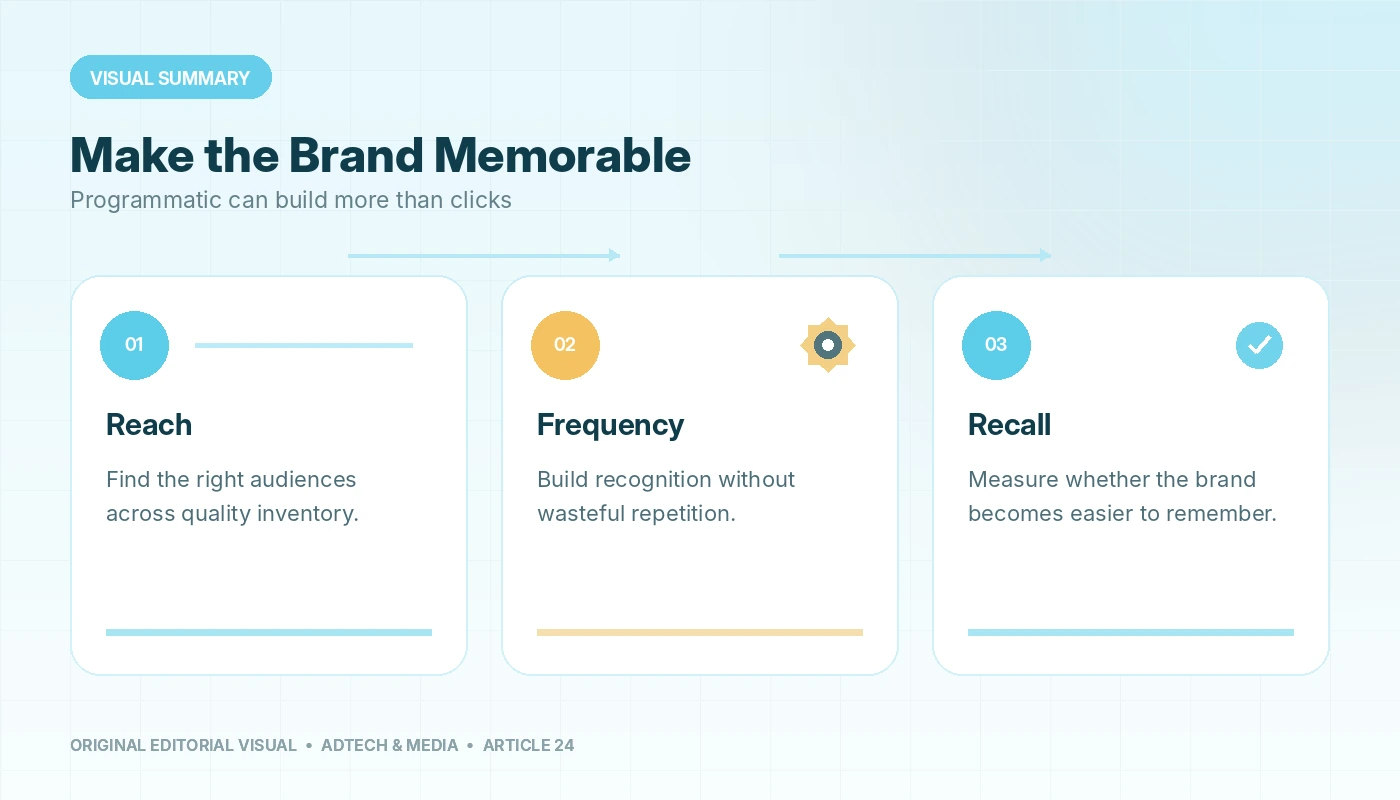
Brand awareness requires repeated, recognizable exposure among the right people. Traditional media planning can deliver scale, while programmatic adds granular audience selection, frequency control, rapid creative learning, and cross-channel data.
The risk is allowing optimization toward the easiest measurable action to distort the brand objective. Clicks are not a complete measure of memory, preference, or future consideration.
AdTech & Media
The central argument
The article presents programmatic as a way to combine broad reach with audience intelligence. Campaigns can sequence messages, control overexposure, test creative, and observe how awareness activity contributes to later engagement.
Brand building still depends on distinctive creative, consistent positioning, suitable environments, and enough time. Technology improves execution; it does not replace the idea people need to remember.
AdTech & Media
What to do in practice
- Define the audience and awareness outcome before selecting buying tactics.
- Plan reach and frequency deliberately rather than optimizing only for clicks.
- Use consistent brand assets while adapting formats to channel and context.
- Protect placement quality and evaluate the supply path behind impressions.
- Use brand-lift, search, site behavior, or sales evidence to complement delivery metrics.
Create a measurement hierarchy: delivery quality first, audience reach second, brand response third, and downstream business signals over an appropriate time horizon. This prevents a single easy metric from dominating the strategy.
AdTech & Media
Closing perspective
Programmatic can build brands when its precision serves a clear creative and audience strategy. The objective should guide the machine—not the other way around.