
Leadership & Careers
Why it matters
People can develop a deep emotional attachment to a company, especially after years of growth, shared pressure, and important relationships. That attachment can be meaningful, but it becomes risky when personal identity and security depend entirely on an institution whose priorities may change.
Companies restructure, change leaders, enter new markets, cut costs, or close businesses. These decisions may be rational for the organization while being painful for individuals.
Leadership & Careers
The central argument
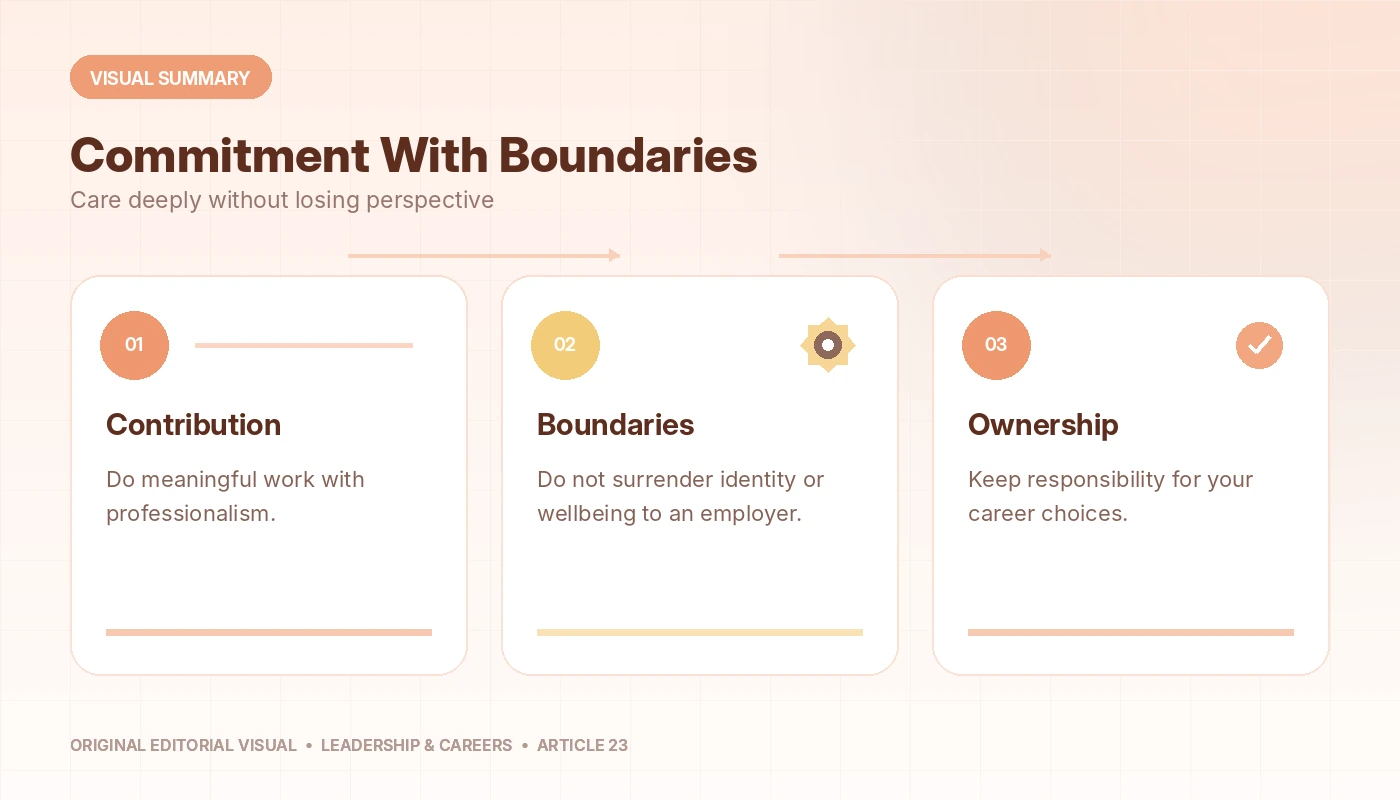
The article’s provocative title is not an argument for cynicism or poor commitment. It is a call for reciprocal, reality-based loyalty. Employees should contribute fully, and employers should earn trust through fairness, recognition, development, transparency, and consistent treatment.
Professionals also need to maintain their skills, networks, financial awareness, and sense of self beyond one employer.
Leadership & Careers
What to do in practice
- Commit to your responsibilities and colleagues without surrendering independent judgment.
- Keep learning and maintain relationships outside your immediate organization.
- Notice whether loyalty is being reciprocated through fair treatment and growth.
- Separate your personal worth from your title, employer, or access to internal status.
- Prepare responsibly for change even when the current role feels secure.
Once or twice a year, review your skills, achievements, network, financial buffer, and career direction. This is not disloyal; it is professional stewardship of a career that belongs to you.
Leadership & Careers
Closing perspective
Care deeply about the work and the people. Keep enough independence to make healthy decisions when the organization’s needs and your own no longer align.