

AdTech & Media
Why it matters
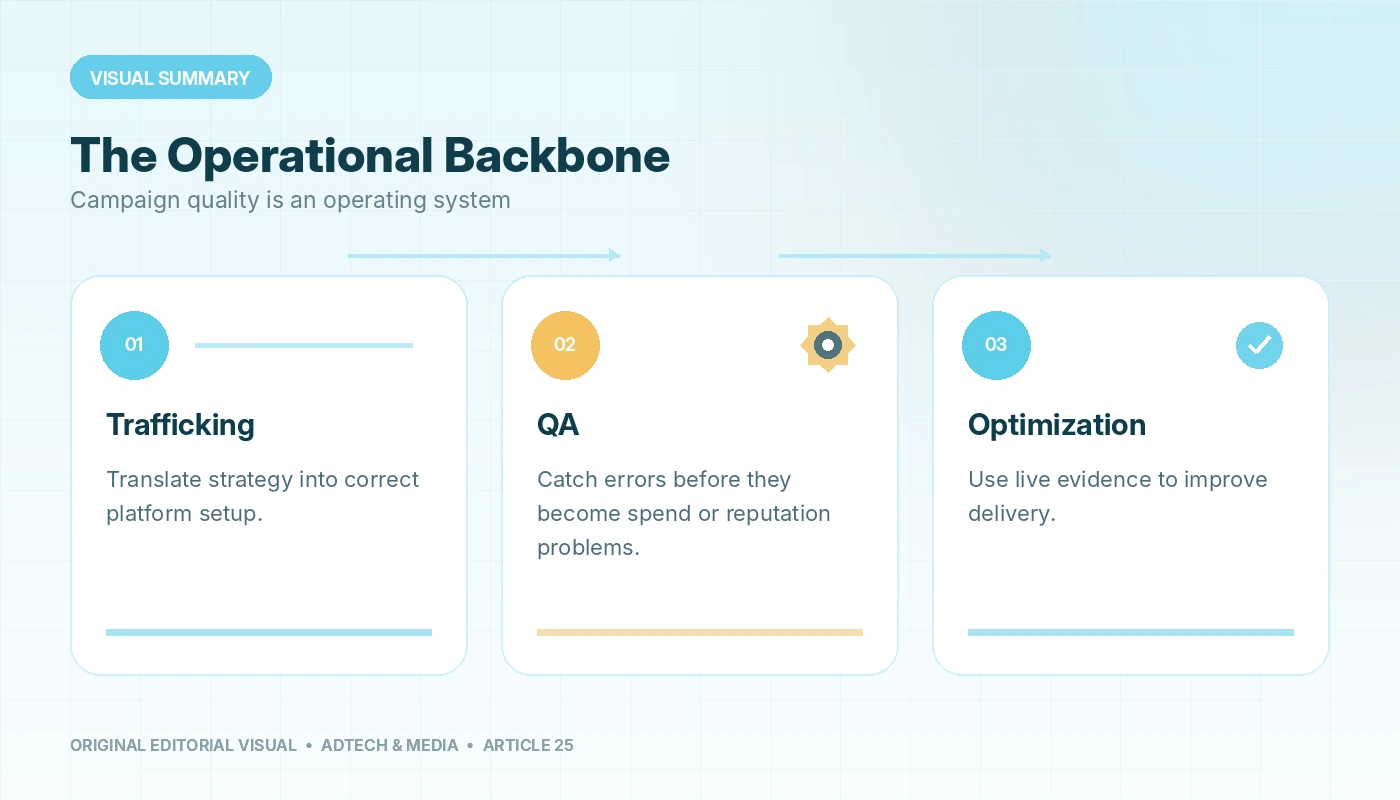
Digital marketing spans search, email, display, social, video, mobile, and programmatic channels. Each has its own formats and platforms, but all require a chain of operational work: briefing, setup, tracking, quality checks, launch, monitoring, optimization, reconciliation, and reporting.
When the chain is fragmented, small errors in tags, targeting, creative, dates, budgets, or data can undermine the campaign regardless of the original strategy.
AdTech & Media
The central argument
The article explains AdOps as the coordination layer between commercial intent and live delivery. It includes both “pull” channels, where users express interest, and “push” channels, where messages are delivered based on audience and context.
Strong operations creates repeatability without becoming rigid. Standards, automation, and documentation handle common work; skilled operators manage exceptions, judgment, and communication.
AdTech & Media
What to do in practice
- Create a single source of truth for campaign requirements and approved assets.
- Standardize naming, tracking, QA, and launch criteria across channels.
- Monitor delivery and quality early enough to correct problems before the campaign ends.
- Connect reporting with the original business objective and buying method.
- Use recurring errors to improve upstream briefs, systems, and training.
Map the campaign lifecycle from sale to final report, identify every handoff and failure point, then assign clear ownership and evidence for each control. This makes operational risk visible and improvable.
AdTech & Media
Closing perspective
Digital advertising operations is the discipline that makes media executable, measurable, and trustworthy. The quality of the operation often determines whether clients return.