

AdTech & Media
Why it matters
Traditional out-of-home advertising offered scale and visibility but required long planning cycles and provided limited flexibility once creative was installed. Digital screens changed the operating model by making content dynamic, scheduled, and responsive to context.
Programmatic access adds audience and transaction data, allowing buyers to activate selected screens, times, and conditions rather than purchasing only a fixed block of inventory.
AdTech & Media
The central argument
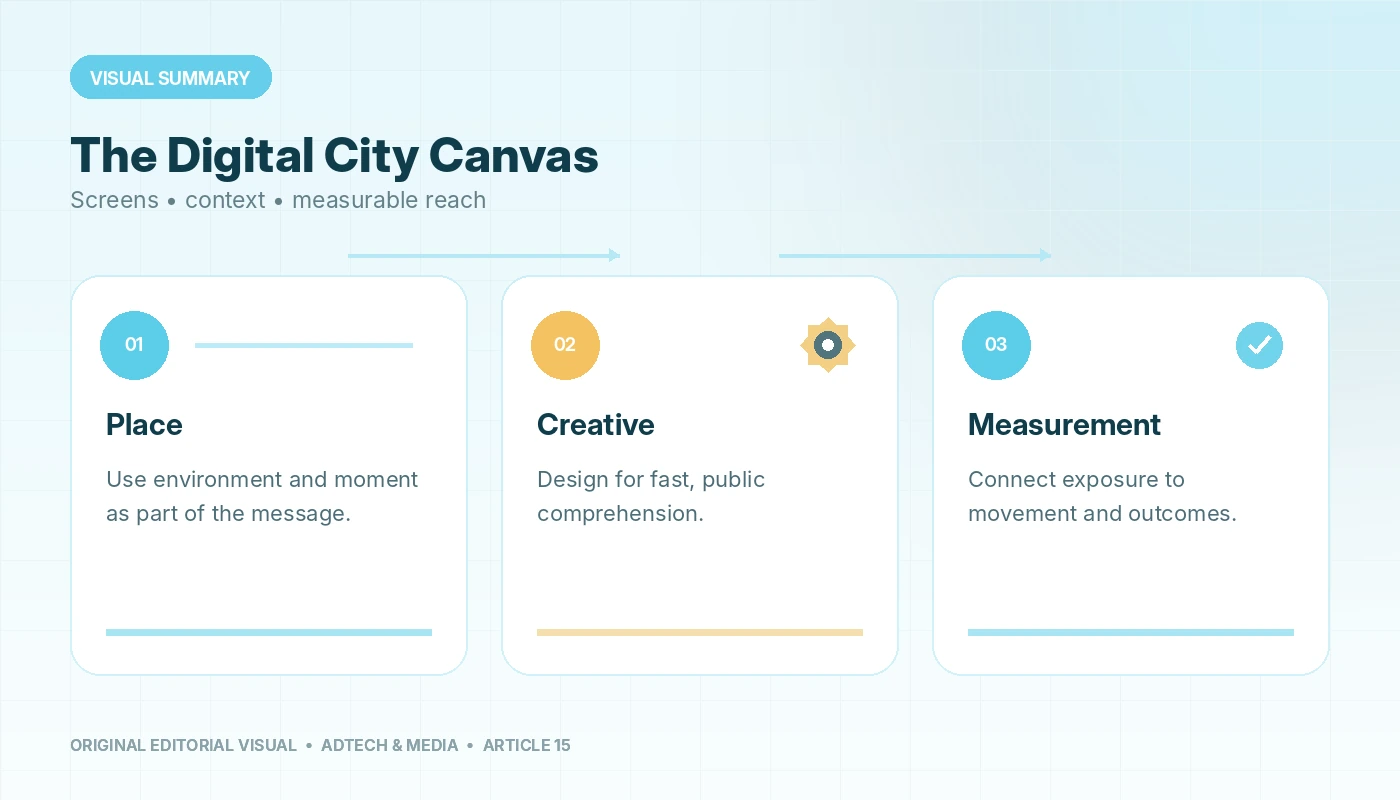
The article introduces common DOOH environments—roadsides, transit, retail, office, leisure, and place-based networks—and explains how location, time, weather, events, and audience movement can shape delivery.
It also highlights the measurement challenge. Exposure outside the home is probabilistic, and responsible planning must distinguish potential visibility from verified attention or business impact.
AdTech & Media
What to do in practice
- Choose inventory based on audience context and the role DOOH plays in the wider campaign.
- Design creative for distance, motion, dwell time, and environmental conditions.
- Use contextual triggers only where they improve relevance rather than create complexity.
- Combine reach and frequency estimates with brand, footfall, or sales-lift studies where appropriate.
- Plan governance for creative approval, screen quality, brand safety, and proof of play.
A strong DOOH brief states the audience moment, screen environment, required visibility, trigger logic, creative variants, and measurement method before inventory is selected.
AdTech & Media
Closing perspective
DOOH is not simply a digital version of a poster. It is a distinct medium whose strength comes from combining public presence, contextual intelligence, and flexible activation.