
Leadership & Careers
Why it matters
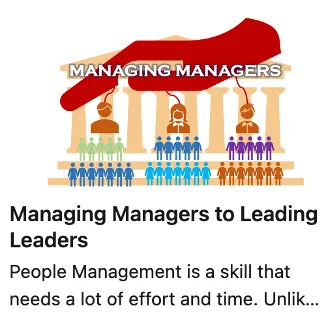
A manager promoted to lead other managers can easily continue the habits that made them successful earlier: solving problems directly, inspecting every detail, and becoming the central point for decisions. That approach limits the growth of the next layer and turns the senior leader into a bottleneck.
Leading leaders requires a different unit of work. The focus shifts from individual tasks to decision quality, relationships, standards, organizational capability, and the health of the management system.
Leadership & Careers
The central argument
The article emphasizes role modelling, coaching, autonomy, and thoughtful questioning. Senior leaders should be visible enough to understand reality without bypassing their managers or taking over their authority.
Feedback should be direct and private; recognition can be public. Managers need room to make decisions, learn from consequences, and develop their own leadership voice rather than imitate a supervisor.
Leadership & Careers
What to do in practice
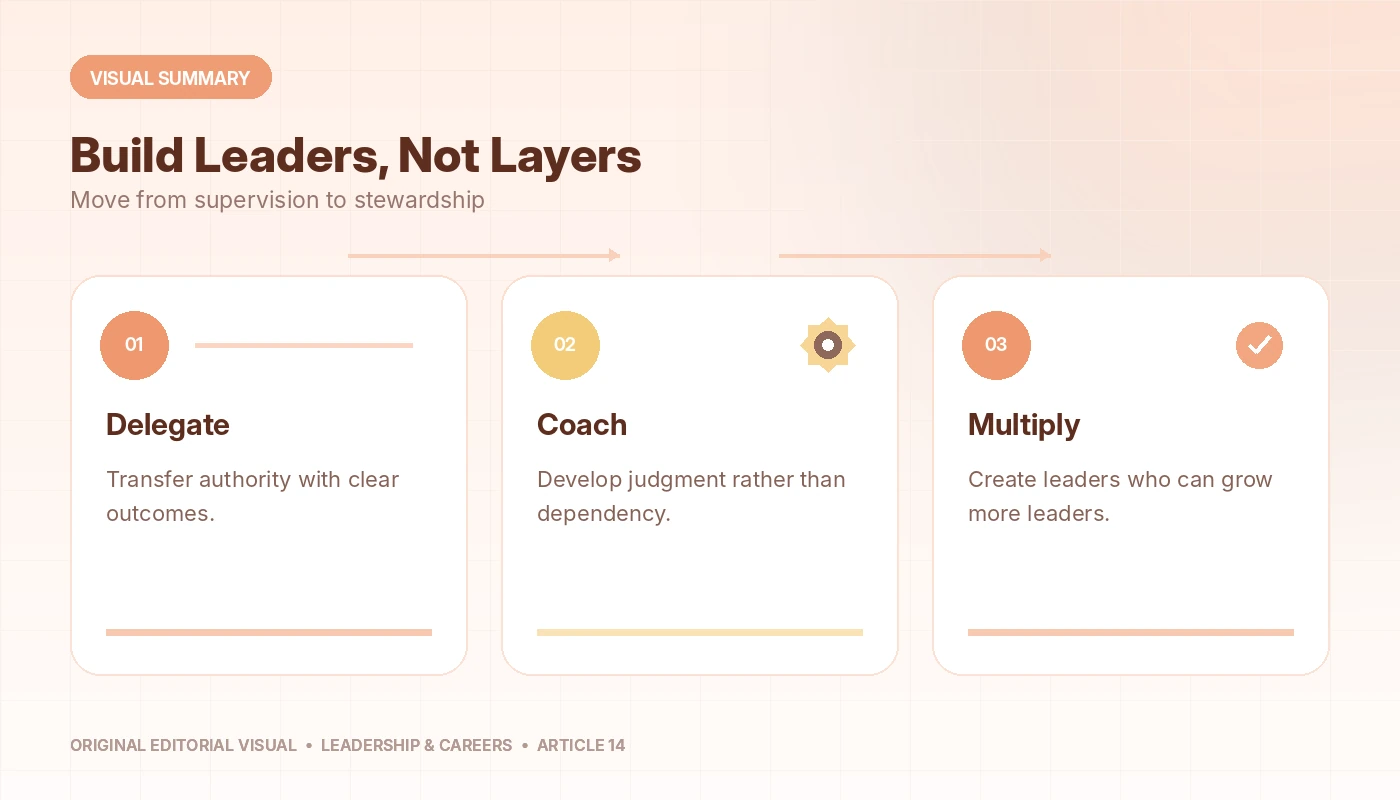
- Agree on outcomes, principles, and decision boundaries instead of prescribing every action.
- Coach with questions that improve thinking rather than supplying immediate answers.
- Build respectful relationships with indirect reports without undermining their manager.
- Recognize good leadership behavior, not only short-term delivery.
- Judge your success partly by how many capable leaders grow around you.
Use one-to-ones to review decisions, team dynamics, capability gaps, and leadership dilemmas—not only project status. Ask what the manager noticed, considered, chose, and learned.
Leadership & Careers
Closing perspective
The move from managing managers to leading leaders is a move from control to multiplication. Your legacy becomes the quality of judgment and leadership that continues without you.