
Leadership & Careers
Why it matters
Career changes can make experienced professionals feel as though they are starting from zero. Employers may also focus too narrowly on direct industry history and miss evidence of communication, leadership, organization, adaptability, or problem-solving developed elsewhere.
Transferable skills provide the bridge between past experience and a new context. The bridge becomes credible when the candidate can show how the skill produced an outcome.
Leadership & Careers
The central argument
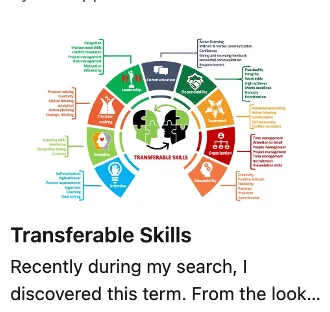
The article highlights capabilities such as communication, dependability, teamwork, organization, adaptability, initiative, empathy, decision-making, leadership, and technology literacy. These skills matter because every role is performed through people, systems, priorities, and change.
Merely listing the skills is not enough. Candidates should connect each one to a situation, action, result, and lesson that the target employer can understand.
Leadership & Careers
What to do in practice
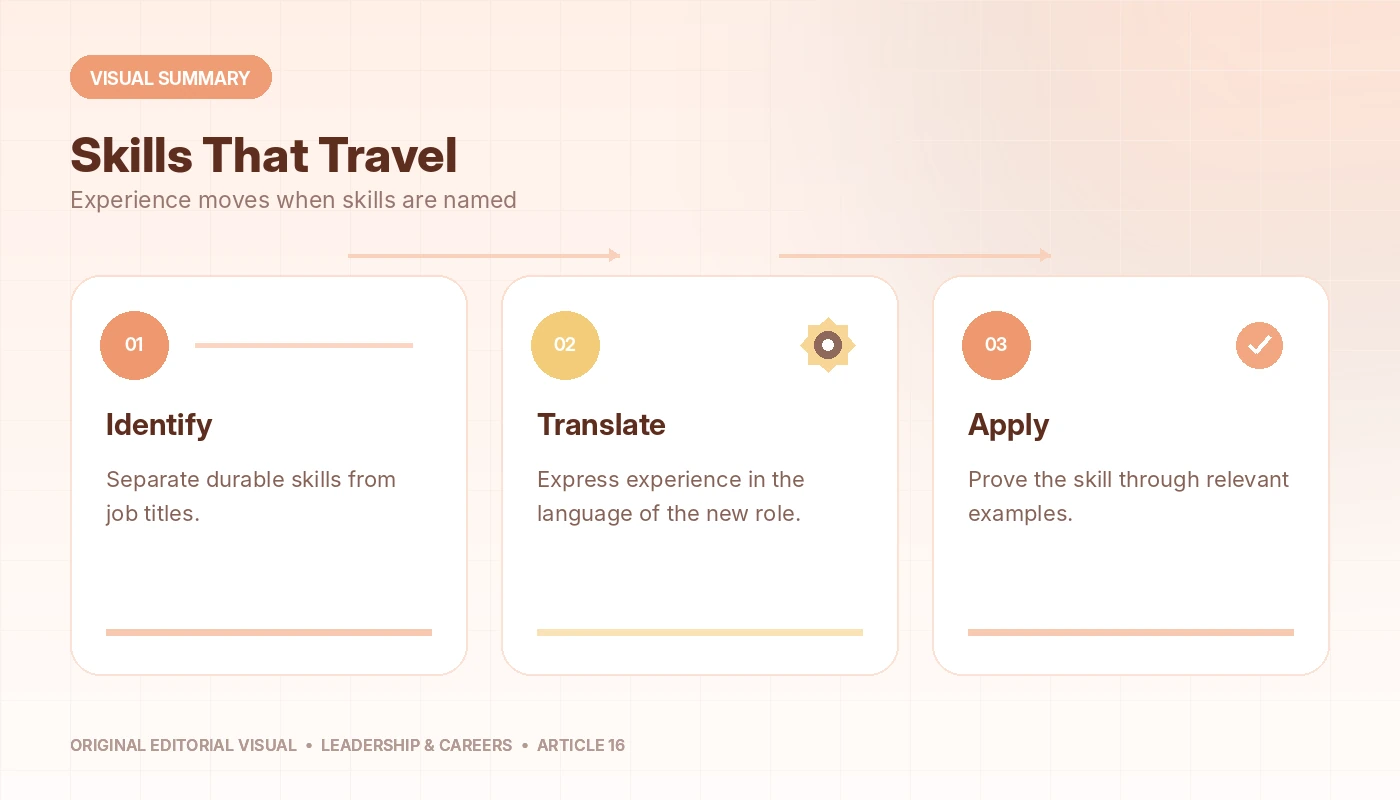
- Identify the recurring capabilities behind your best results, not only the tasks you performed.
- Translate industry-specific language into outcomes that a new audience recognizes.
- Use examples with scope, constraints, action, and evidence of impact.
- Show learning agility by explaining how you entered unfamiliar situations successfully.
- Adapt the resume and interview story to the needs of the target role.
Create a skills evidence matrix: one row per transferable skill, with examples, measurable outcomes, and the role requirement it supports. This makes applications more focused and interviews easier to prepare.
Leadership & Careers
Closing perspective
Experience does not become irrelevant when the context changes. The task is to make the underlying capability visible, credible, and connected to the next opportunity.