

Leadership & Careers
Why it matters
New leaders arrive with experience, expectations, and a mandate to improve results. That combination can tempt them to import old solutions, announce changes too early, or mistake visible activity for progress.
The first months are more valuable when treated as structured discovery: learning how decisions are made, where work really happens, which relationships carry trust, and which problems are symptoms of deeper constraints.
Leadership & Careers
The central argument
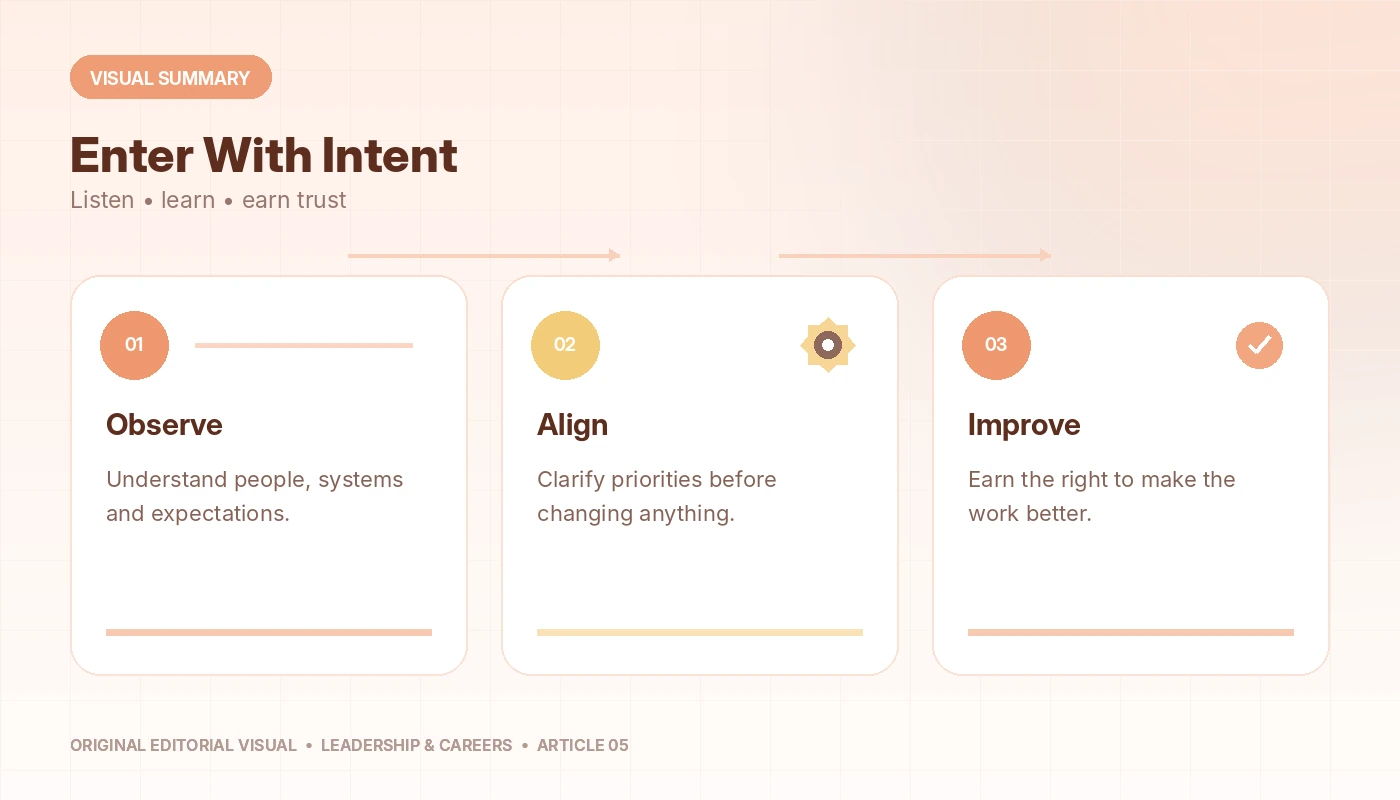
The article frames the first 90 days as a sequence: understand the engine room, build credibility with the people who operate it, identify a small number of meaningful gaps, and then lead change with evidence and participation.
It also warns against premature judgment, public criticism of predecessors, unnecessary restructuring, and micromanagement. These behaviors may create the appearance of control while making it harder to hear the truth.
Leadership & Careers
What to do in practice
- Ask stakeholders what must be protected, what is broken, and what has already been tried.
- Spend time with frontline teams and observe the actual workflow, not only the process map.
- Deliver one or two credible early improvements without claiming to have solved everything.
- Set decision principles and communication rhythms before launching major change.
- Avoid replacing people or processes merely to demonstrate authority.
Create a 30–60–90 day learning plan with specific questions, stakeholders, operating reviews, and decision gates. At each gate, publish what you learned, what remains uncertain, and what you will do next.
Leadership & Careers
Closing perspective
A strong beginning is not the loudest beginning. It is the one that converts humility, observation, and trust into well-timed action.