
Leadership & Careers
Why it matters
AI can assist with planning, reporting, pattern recognition, and routine decision support. That makes many management activities faster, but it does not remove the need for leaders who can interpret ambiguity, create belief, resolve tension, and help people grow.
The more technology expands what is possible, the more important it becomes to decide what is worth doing and how people should experience the journey.
Leadership & Careers
The central argument
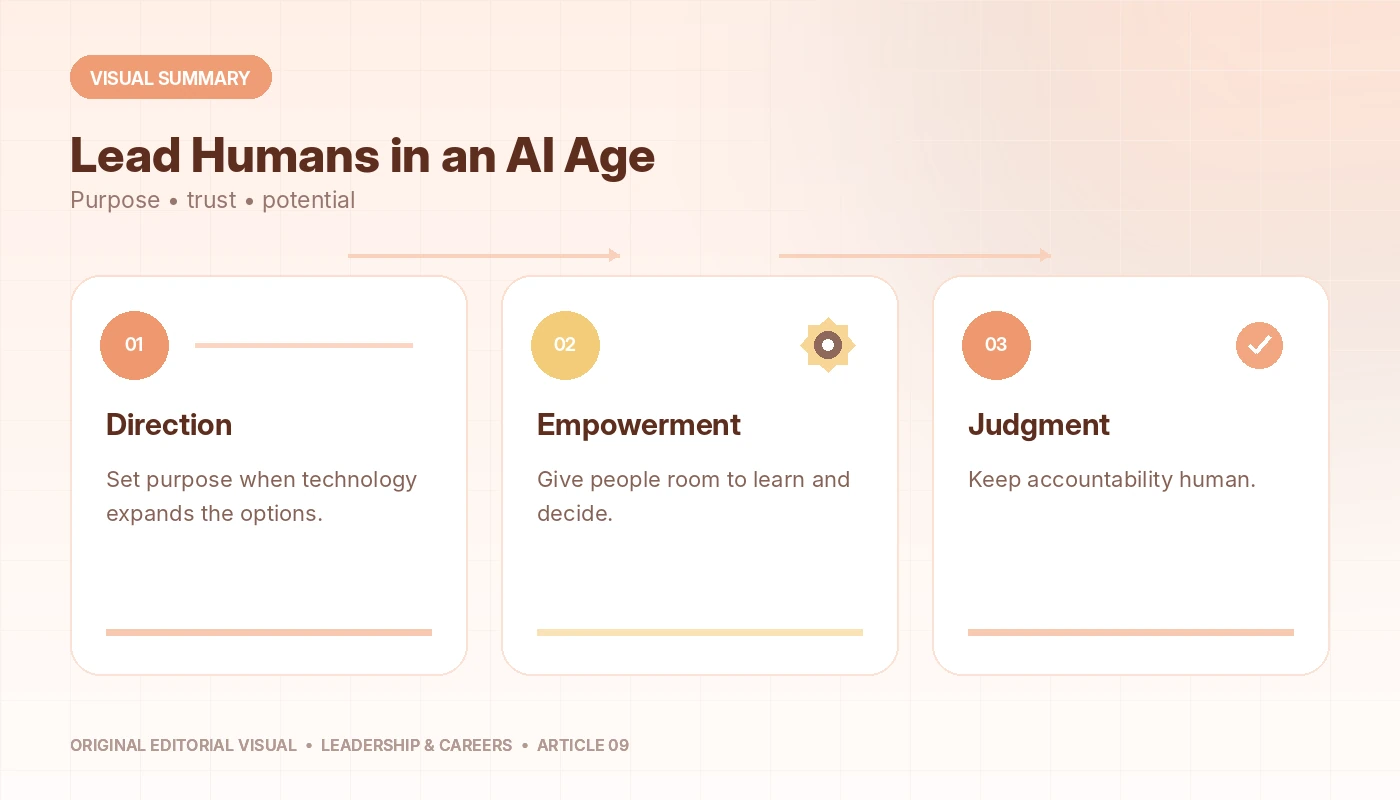
The article distinguishes management’s focus on coordination, control, and consistency from leadership’s focus on direction, trust, and potential. Effective executives move between the two, but they do not mistake process compliance for commitment.
True leadership is described through human pillars: self-awareness, empathy, clarity, courage, integrity, empowerment, and service. These qualities shape whether AI becomes a source of fear or a tool people can use responsibly.
Leadership & Careers
What to do in practice
- Explain the purpose behind technology and organizational change, not only the implementation plan.
- Create psychological room for questions, disagreement, and learning during uncertainty.
- Use AI to extend human capability while preserving clear accountability for decisions.
- Develop people through stretch, coaching, and trust rather than dependency on the leader.
- Model the standards you expect, especially when pressure makes shortcuts attractive.
In leadership reviews, discuss not only delivery but also trust, decision quality, capability growth, and the clarity people have about purpose. These signals reveal whether the organization is merely managed or genuinely led.
Leadership & Careers
Closing perspective
Technology can scale information and execution. Leadership remains the work of turning possibility into shared, responsible human action.