THE PROBLEM WASN'T SUPPORT. IT WAS ONBOARDING
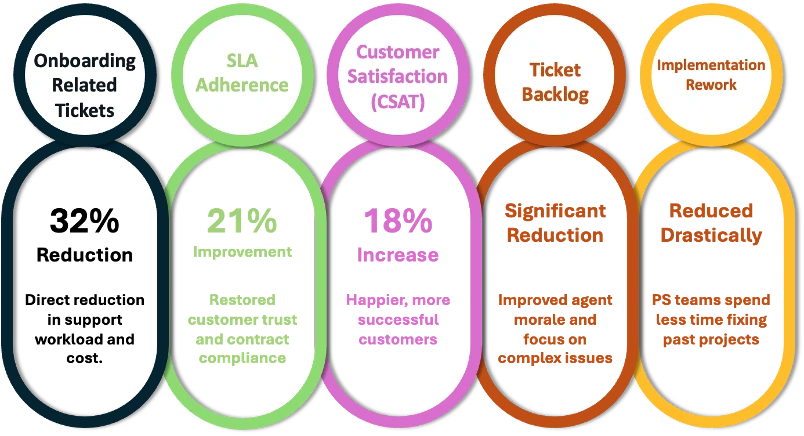
Addressing Root Cause a Blueprit for SustainabilityFacing a 28% surge in support tickets, a deep-dive analysis revealed that over 40% originated not from product issues, but from poor customer onboarding and configuration by Professional Services.
Many organizations attempt to solve rising support demand by scaling support teams. However, a large percentage of support tickets originate from upstream operational issues, particularly during customer onboarding and implementation. This case study examines how a data-driven operational initiative identified and addressed structural gaps between Professional Services (PS) implementation teams and Customer Support operations.

In one of my global operations leadership roles, we began observing a steady increase in customer support tickets, which was impacting operational performance. Over two quarters, support ticket volume had increased by 28%, resulting in :
❌ Declining SLA adherence
❌ Growing ticket backlog
❌ Longer resolution times
❌ Increased operational cost

A deep analysis revealed that over 40% of support tickets originated from onboarding and configuration issues
that should have been resolved during implementation.
The Strategic Context: Why Support Demand Was Rising
Customer support is often treated as the primary mechanism for resolving customer issues, but it is frequently only addressing symptoms rather than root causes.
During the period analyzed, the support organization began experiencing:
🔥 Increased ticket volume
🔥 Higher escalation rates
🔥 SLA breaches
🔥 Growing operational strain
Initial assumptions suggested the need for more support capacity, but a deeper investigation suggested a different hypothesis:
The problem might not be the support team — it might be the customer onboarding process.

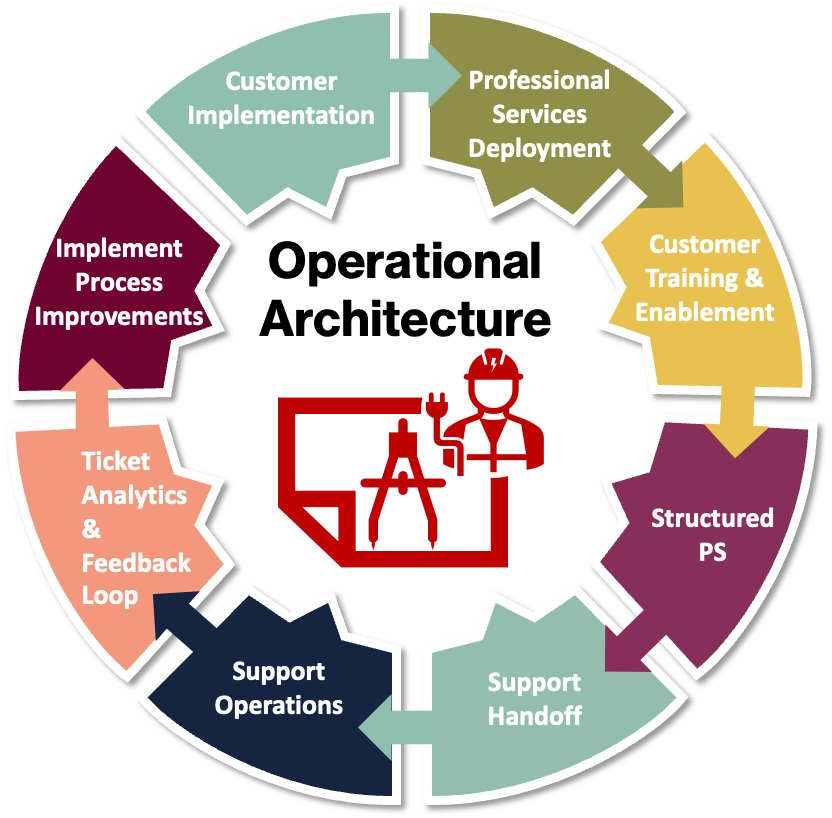
A three-phase operational transformation was implemented focused on data analysis, cross-functional process alignment, and preventive customer enablement
1️⃣. Data-driven root cause analysis
2️⃣. Redesign of PS-to-Support handoff processes
3️⃣. Preventive customer enablement framework

The first, non-negotiable step was to let the data speak. We conducted a rigorous analysis of support tickets, segmenting them by:
⚡ Issue Category
⚡ Product Module
⚡ Customer Segment (e.g., size, industry)
⚡ Implementation Pathway (e.g., standard, accelerated)
A large portion of issues originated before customers ever interacted with support teams. Common issues included:
-⏱️- Incorrect system configurations
-⏱️- Incomplete integrations
-⏱️- Customers not fully trained on workflows
-⏱️- Misalignment between implementation teams and operational teams
The result was a revelation: Over 40% of all tickets were directly related to onboarding and configuration issues. The data painted an even starker picture when comparing implementation pathways. Customers who underwent an "accelerated" or "lite" onboarding generated 2.3× higher support ticket volume than those who received a full, structured implementation. This was the irrefutable link between implementation quality and support demand. In other words, support teams were solving problems created during onboarding.

Armed with this evidence, we redesigned the operational interface between the two teams.
The cornerstone was a standardized, mandatory PS-to-Support handoff framework.
🚨 Configuration Validation Checklist: Before any project could be marked "complete," PS was required to validate and sign off on a comprehensive checklist, including:
👉 System configuration verification against a standard template.
👉 Successful integration testing results.
👉 Formal confirmation of environment readiness.
🚨 Implementation Documentation Standard: Every project now produced a structured "handoff package" containing:
👉 A clear system architecture diagram.
👉 A log of all custom configurations and their rationale.
👉 A list of known limitations or workarounds.
This documentation was then ingested into the support knowledge base, making it instantly accessible to every agent.
Standardized PS-to-Support Handoff Framework
A formal handoff process was introduced. Components included:
🔍 Configuration Validation Checklist
--🌟-- Integration verification
--🌟-- System configuration review
--🌟-- Deployment validation
🔍 Implementation Documentation
--🌟-- Architecture overview
--🌟-- Custom configurations
--🌟-- Known limitations
Customer Readiness Certification
🔍 Implementation projects could not close until:
--🌟-- Training was completed
--🌟-- Workflows were validated
--🌟-- Operational readiness was confirmed

Support and Professional Services should not operate as separate functions. They are interconnected components of the same customer lifecycle.
Support reflects the operational health of a product, while Professional Services determines how well customers are prepared for success.
By strengthening onboarding processes and introducing structured handoffs between teams, organizations can significantly reduce avoidable support demand while improving customer experience.
The most scalable support strategy is not simply hiring more agents—it is preventing problems before they occur. The Preventive model included the following:
✅ Structured Customer Training
✅ Professional Services teams introduced:
-- 🌟--Onboarding workshops
-- 🌟--Product usage training
-- 🌟--Standard implementation playbooks
✅ Closed-Loop Operational Feedback
✅ Support teams conducted monthly ticket pattern reviews.
✅ Insights were used to update:
-- 🌟--Implementation playbooks
-- 🌟--Configuration standards
-- 🌟--Training materials
This created a self-improving operational system.