Add a pre-QC gate
Reviewed every ticket before execution to identify missing assets, specification issues, or other launch risks.

Case study 10 · Client Delivery
Pre-execution quality checks and early communication eliminated last-minute fire drills.
A digital operations team embedded pre-QC, status confirmation, and collaborative issue resolution into campaign delivery—shifting client engagement from reactive escalation to proactive partnership.
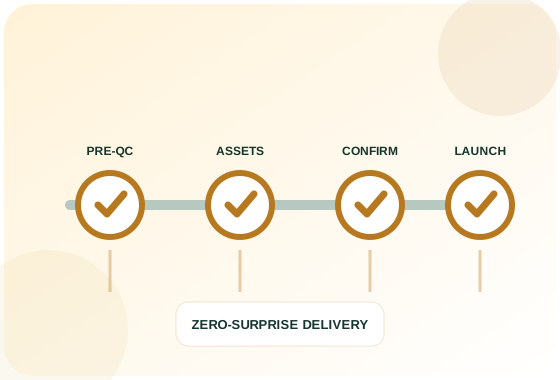
Account managers and clients had little visibility into execution risk until the final stages of campaign setup. Problems were detected late, teams spent time firefighting, and launch dates became vulnerable. The operating model needed to surface risk early and make communication part of the workflow.
The work was organized around a small number of operating choices that could be governed, measured, and repeated—not a collection of disconnected initiatives.
Reviewed every ticket before execution to identify missing assets, specification issues, or other launch risks.
Sent account managers and clients a clear “no issues” confirmation or a documented issue list with required actions.
Enabled delivery, account, and client teams to work simultaneously on identified issues instead of waiting for sequential escalation.
Communicated expected impact as soon as risk emerged, preserving decision time and trust.
Campaigns achieved 100% on-time delivery.
Within this digital-delivery engagement, early and transparent communication contributed to a 35% increase in NPS relative to its starting baseline.
Teams spent less time on emergency coordination because risks were found and owned earlier.