Map both environments
Assessed the advertiser and publisher stacks, data constraints, ownership, and end-to-end request flow.

Case study 14 · AdTech Integration
A macro-based integration bridged advertiser and publisher systems that did not natively interoperate.
An AdTech team coordinated five teams across two companies to enable language, location, and audience-based dynamic ads through Google Ad Manager, Campaign Manager, GPT tags, and DMP integration.
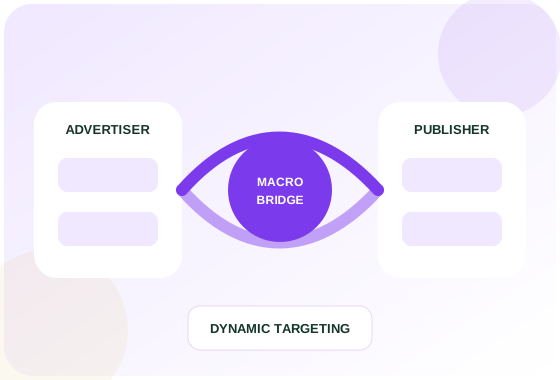
The advertiser wanted personalized creatives based on language, geography, and audience segment, but its ad server and the publisher’s environment did not exchange the required variables natively. The publisher had not implemented dynamic ads before, and the delivery required tight coordination across multiple technical and business teams within two months.
The work was organized around a small number of operating choices that could be governed, measured, and repeated—not a collection of disconnected initiatives.
Assessed the advertiser and publisher stacks, data constraints, ownership, and end-to-end request flow.
Documented responsibilities, dependencies, test criteria, and deadlines for every participating team.
Used macros and updated GPT tags to pass permitted language, location, and audience variables into the advertiser workflow.
Integrated the DMP with Google Ad Manager to support real-time segment-based targeting.
Seventy-five million ads were served using language, location, and behavioral relevance.
The implementation generated $350K in incremental revenue and increased eCPM by 35%.
Audience-enabled delivery improved inventory utilization by 20%.