Govern the transition daily
Created a milestone-led transition plan covering recruitment, documentation, knowledge transfer, readiness, and service-risk monitoring.

Case study 04 · Ad Operations
A 75-FTE transition from nearshore delivery to a standardized global model.
North American ad operations were transitioned from Canada to India through phased knowledge transfer, recruitment, process standardization, quality governance, and automation—while preserving service continuity.
An acquired ad-tech operation remained organizationally and operationally separate from its parent company. Billing, campaign execution, reporting, and quality were fragmented, while service coverage was limited to North American business hours. The mandate was to transition the work, lower operating cost, and create a scalable global hub without interrupting delivery.
The work was organized around a small number of operating choices that could be governed, measured, and repeated—not a collection of disconnected initiatives.
Created a milestone-led transition plan covering recruitment, documentation, knowledge transfer, readiness, and service-risk monitoring.
Moved work in controlled waves, supported by process documentation, shadowing, validation, and contingency coverage.
Centralized campaign setup, QA, client servicing, performance measures, escalation, and global shift coverage.
Implemented campaign-data validation, creative-specification checks, and automated screenshots for faster client approvals.
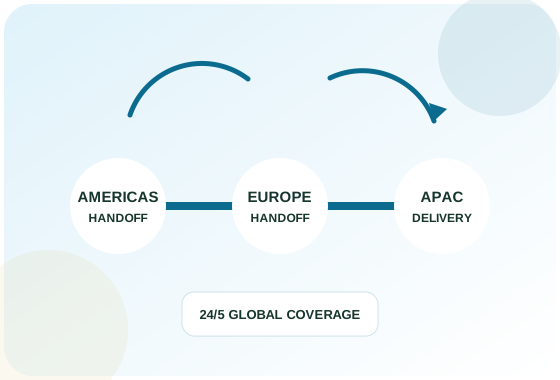
The new hub supported advertiser and partner needs across time zones with a 24/5 delivery model.
Centralized ownership and standardized workflows reduced fragmentation and improved operational control.
Quality governance and automation created an operating backbone designed for future advertising growth.