Forecast workforce capacity
Introduced three-month leave planning and automated attendance visibility to identify coverage risks in advance.

Case study 08 · Operational Excellence
Workforce planning, documented workflows, and proactive communication replaced reactive chaos.
A managed-services operation stabilized service delivery by forecasting staffing, standardizing execution, clarifying ownership, and communicating risks before they became client surprises.
Undocumented processes, inconsistent attendance planning, and last-minute client communication created avoidable SLA breaches and escalating distrust. Teams relied on verbal coordination, accountability was unclear, and staffing gaps were discovered too late to protect delivery.
The work was organized around a small number of operating choices that could be governed, measured, and repeated—not a collection of disconnected initiatives.
Introduced three-month leave planning and automated attendance visibility to identify coverage risks in advance.
Mapped end-to-end workflows, defined roles, and placed quality checkpoints at critical stages.
Created escalation matrices with named ownership, response times, and clear triggers.
Established proactive client-update routines for risks, actions, and resolution status.
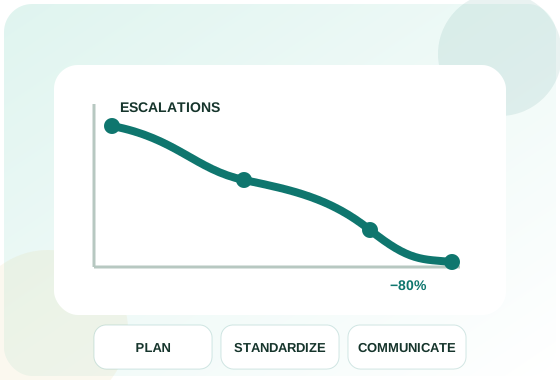
Defined ownership and proactive communication reduced escalations by 80%.
SLA compliance improved 30% while quality remained at 99%.
NPS improved 100%, and advance leave planning eliminated manpower shortages.