Let ticket data identify the source
Segmented demand by issue, product module, customer segment, and implementation path to isolate preventable causes.

Case study 16 · Customer Operations
Root-cause analysis showed that support was absorbing failures created upstream.
Ticket analysis linked more than 40% of support demand to onboarding and configuration gaps. A standardized Professional Services handoff, readiness certification, and closed feedback loop addressed the source rather than adding support capacity.
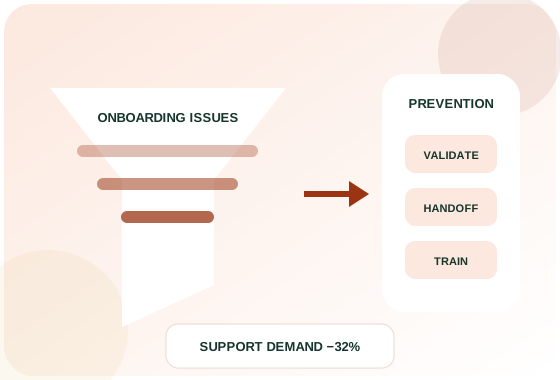
Support volume rose 28% over two quarters, creating backlog, slower resolution, higher cost, and declining SLA performance. Detailed analysis showed that more than 40% of tickets were linked to onboarding or configuration, and accelerated onboarding paths produced 2.3 times more tickets than structured implementations.
The work was organized around a small number of operating choices that could be governed, measured, and repeated—not a collection of disconnected initiatives.
Segmented demand by issue, product module, customer segment, and implementation path to isolate preventable causes.
Required configuration validation, integration evidence, readiness confirmation, architecture context, customizations, and known limitations.
Made training completion, workflow validation, and operational readiness prerequisites for implementation closure.
Used monthly support-pattern reviews to update playbooks, configuration standards, and customer training.
Onboarding-related support tickets fell by 32% as upstream controls improved.
SLA adherence improved 21% and customer satisfaction improved 18%.
Better documentation and readiness reduced repeated diagnosis and unnecessary implementation correction.